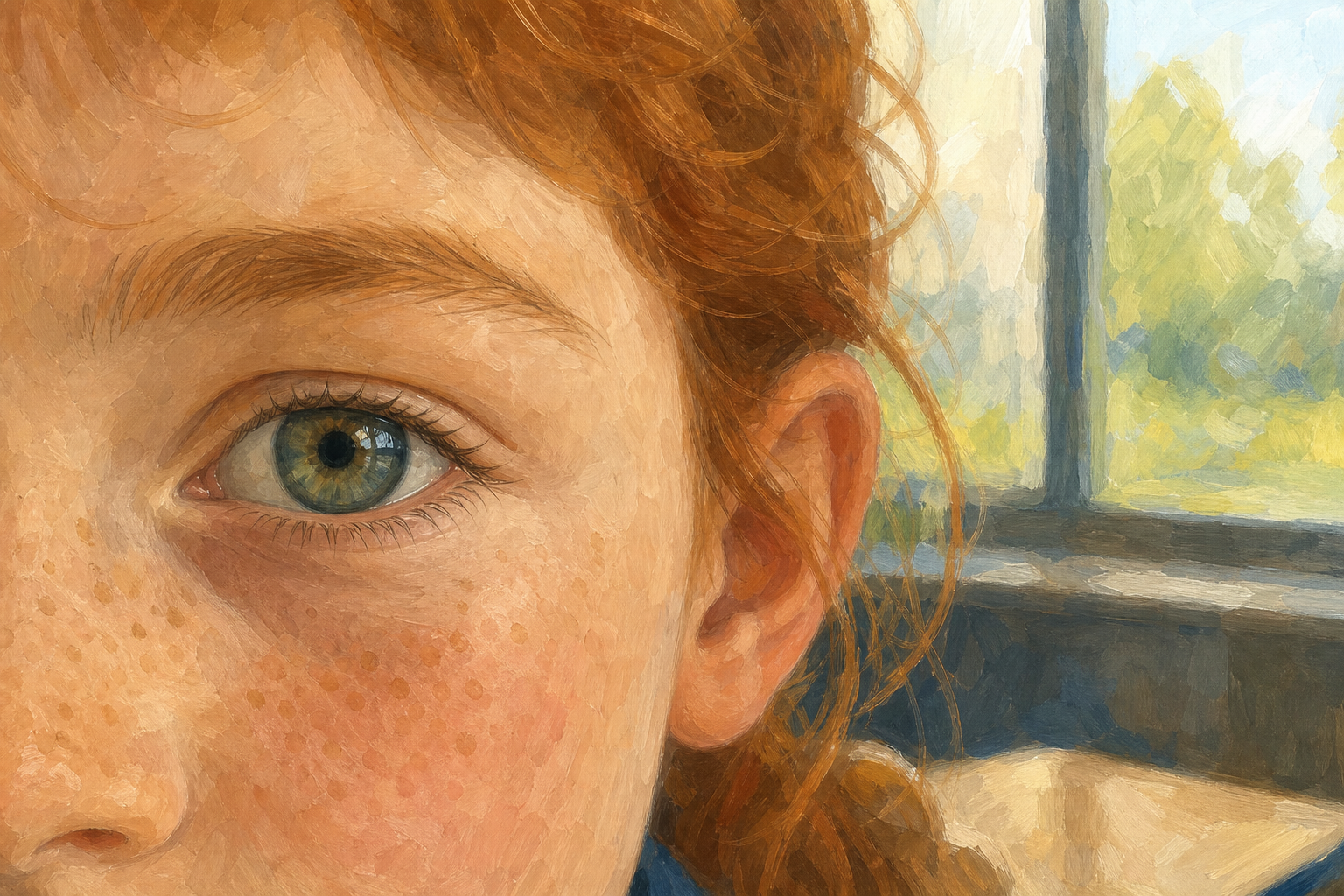
 Have you ever walked from a dim corridor into bright sunlight and felt your eyes take a moment to settle? Or blinked when something came near your face even though you did not mean to?
Today we will look carefully at how the eye reacts to light and to a sudden sound nearby, and we will find out which of those reactions we choose and which the body does on its own.
Look at the dark circle in the middle of the eye on the board. That dark circle is the pupil. It lets light into the eye.
 What do you think the dark circle does when bright light hits it?
Later we will also watch a blink. Some body actions happen quickly without us deciding. We will find out more when we test that together.
First we will watch a partner's pupil in bright light and then when a hand shades the eye.
Talk with your partner: what do you think the pupil will do in bright light? What about when a hand shades the eye?
Now look at the clear plastic sheet your teacher is holding. Later we will hold one between partners like a little window and make one gentle clap beside it. Will a person blink at that gentle clap, even if they try not to?
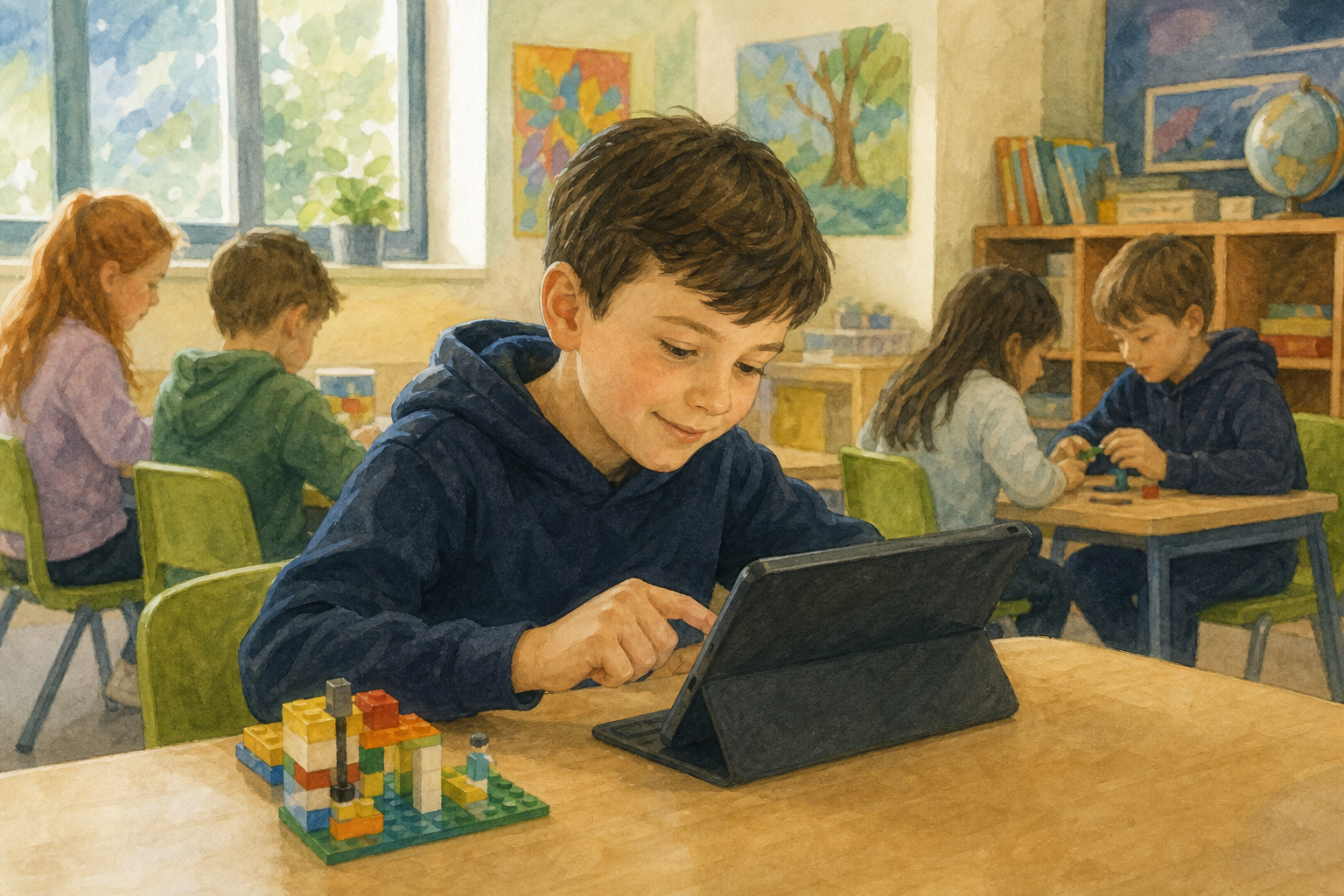
Work in pairs. Your teacher will point out the bright zones (by the windows or under the bright lights). Some pairs may work there first while others wait for a short turn; waiting pairs stay folded in by watching a nearby pair and jotting what they notice.
One person is the watcher and one is the partner. First the watcher looks carefully at the partner's pupil in the brighter light and jots whether it looks bigger or smaller.
Then the partner shades their own eye with a cupped hand held like a little roof above the eye for about ten seconds. Keep a small gap at the front so the watcher can still see the dark circle while it is shaded. If the hand fully blocks the view, lift it just enough for a peek while the eye stays in shade. Watch whether the pupil looks bigger or smaller than in the brighter light. Jot bright and shade on your Investigation Journal page, then swap roles.
Safety: never touch a partner's eye and never shine anything into an eye. Only the person being watched shades their own eye with their own hand.
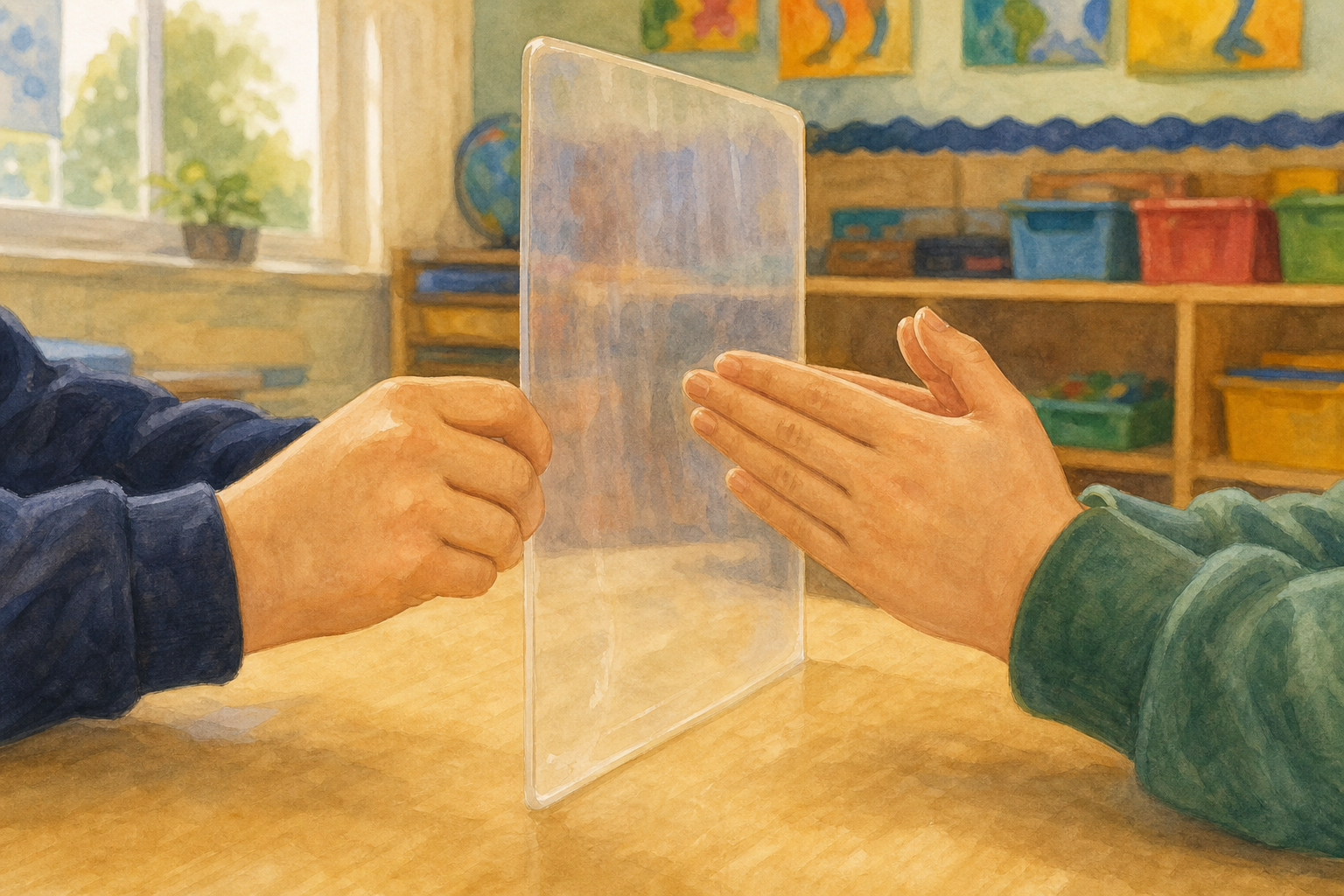 Stay in pairs. Hold the clear plastic sheet upright between you like a little window.
One person watches the partner's eyes. When the teacher signals your table group, the other person makes one gentle clap beside the sheet, never toward the face. Watch whether a blink happens. Note blink or no blink on your Investigation Journal page. Swap roles for one try each on the next signal for your group.
Safety: the sheet stays between you. Clap beside, never at, the face. No touching eyes.
Unlock the full learning experience
You're previewing this lesson. Get full access to this lesson and hundreds more — each one ready to teach, with interactive activities, printable resources and pupil progress tracking built in.
This lesson is copyright of DigitalSkills.org 2017 - 2025. Unauthorised use, copying or distribution is not allowed.