1 - Getting Started ~4 mins
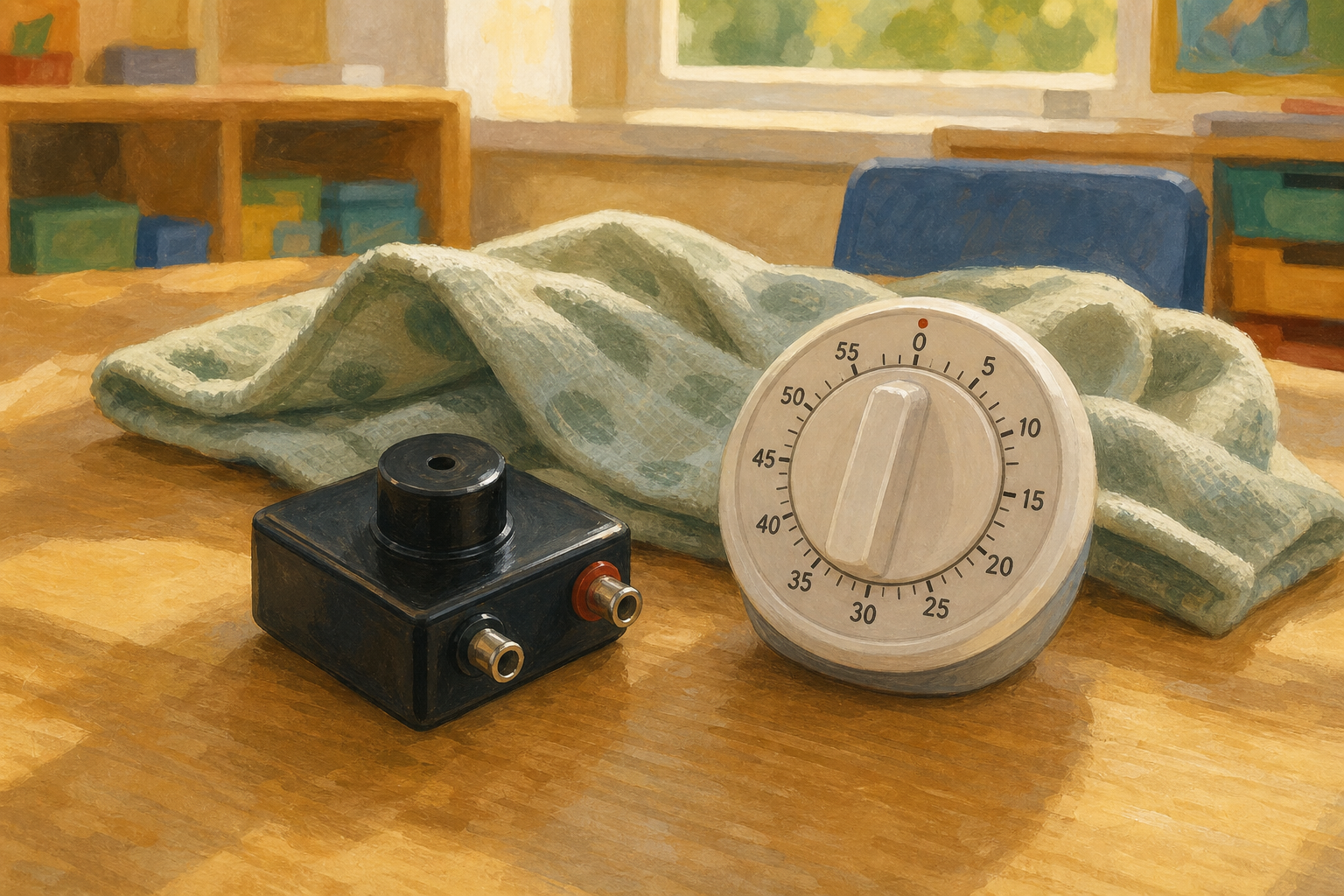 When the classroom door is shut, the corridor sounds quieter. Soft cushions and thick coats can quieten sounds too. What do you think is making the sound quieter?
2 - Soft Things Can Quieten Sound ~5 mins
Today we will learn two important words. To muffle a sound means to make it quieter by wrapping or covering it.
Soft materials feel squashy or fluffy. Hard materials feel stiff.
Here are our four wrappings: foam, soft cloth, bubble wrap and stiff card. Which one do you think will make our buzzer hardest to hear?
3 - What Do We Think Will Muffle Best? ~5 mins
Our question: which wrapping material muffles the buzzer best?
Look at foam, soft cloth, bubble wrap and stiff card. Whisper to a partner which you think will be quietest, and why. Predictions are the start of the science, not a test to get right.
On your Investigation Journal page, write your prediction now: which material, and a short because. We have not tested yet.
4 - Wrap and Listen ~11 mins
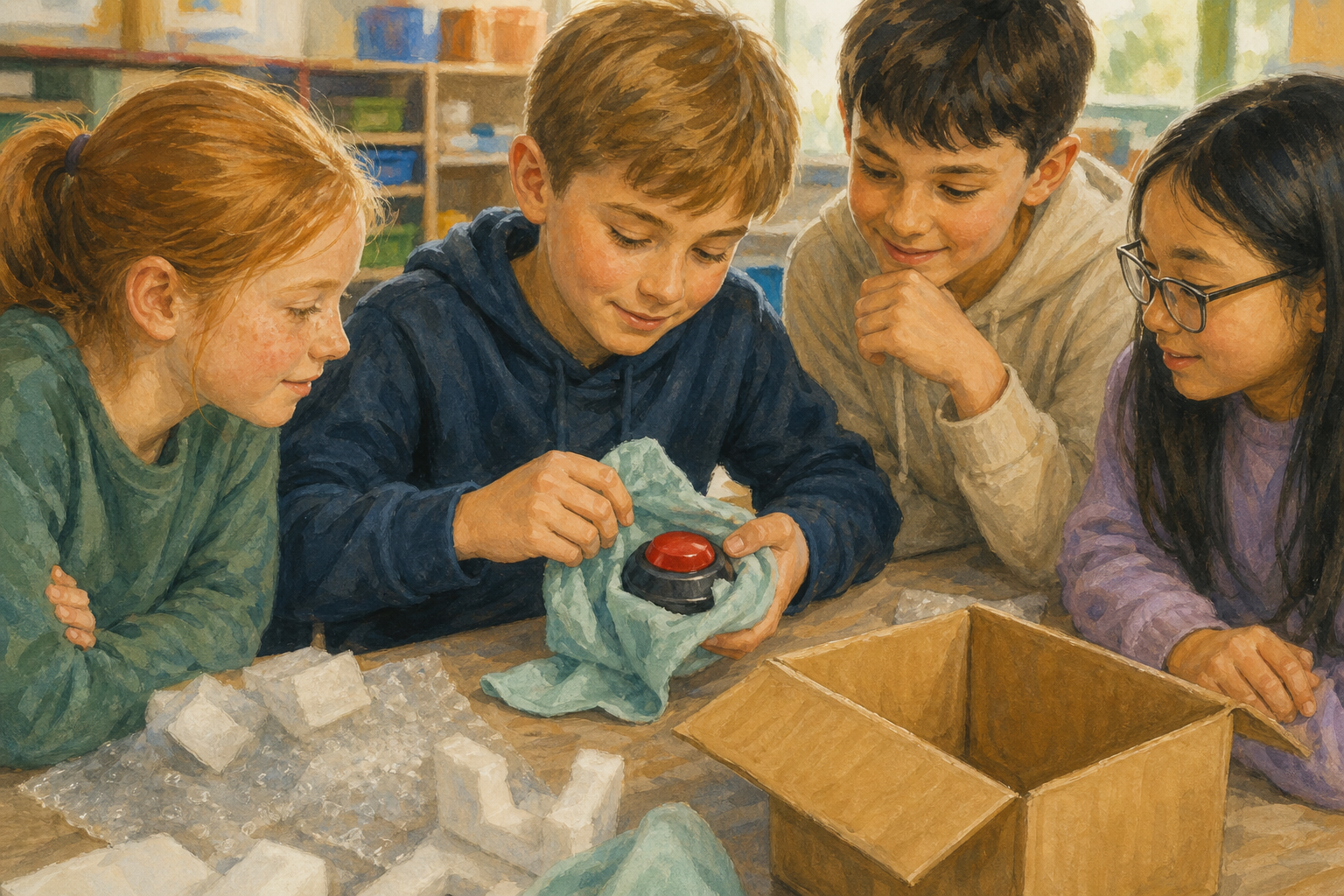 Volunteer pairs wrap the buzzer at the front. Everyone else stays on the listening line and helps decide quiet, medium or loud after each beep.
We try one material at a time: wrap, box, lid on, short beep, same listening spot. We start with stiff card together, then foam, soft cloth and bubble wrap.
5 - Record Our Findings ~8 mins
As a class, choose 1 for quiet, 2 for medium or 3 for loud for each wrapping. Your teacher types the scores and shows the chart. Taller bars mean a louder sound.
Look at which bar is shortest and which is tallest.
On your Investigation Journal page, jot what you heard for each wrap (1, 2, 3 or quiet, medium, loud). Add one line for which was quietest and which was loudest. Your prediction is already written from earlier.
How loud through each wrap?
Unlock the full learning experience
You're previewing this lesson. Get full access to this lesson and hundreds more — each one ready to teach, with interactive activities, printable resources and pupil progress tracking built in.
This lesson is copyright of DigitalSkills.org 2017 - 2025. Unauthorised use, copying or distribution is not allowed.