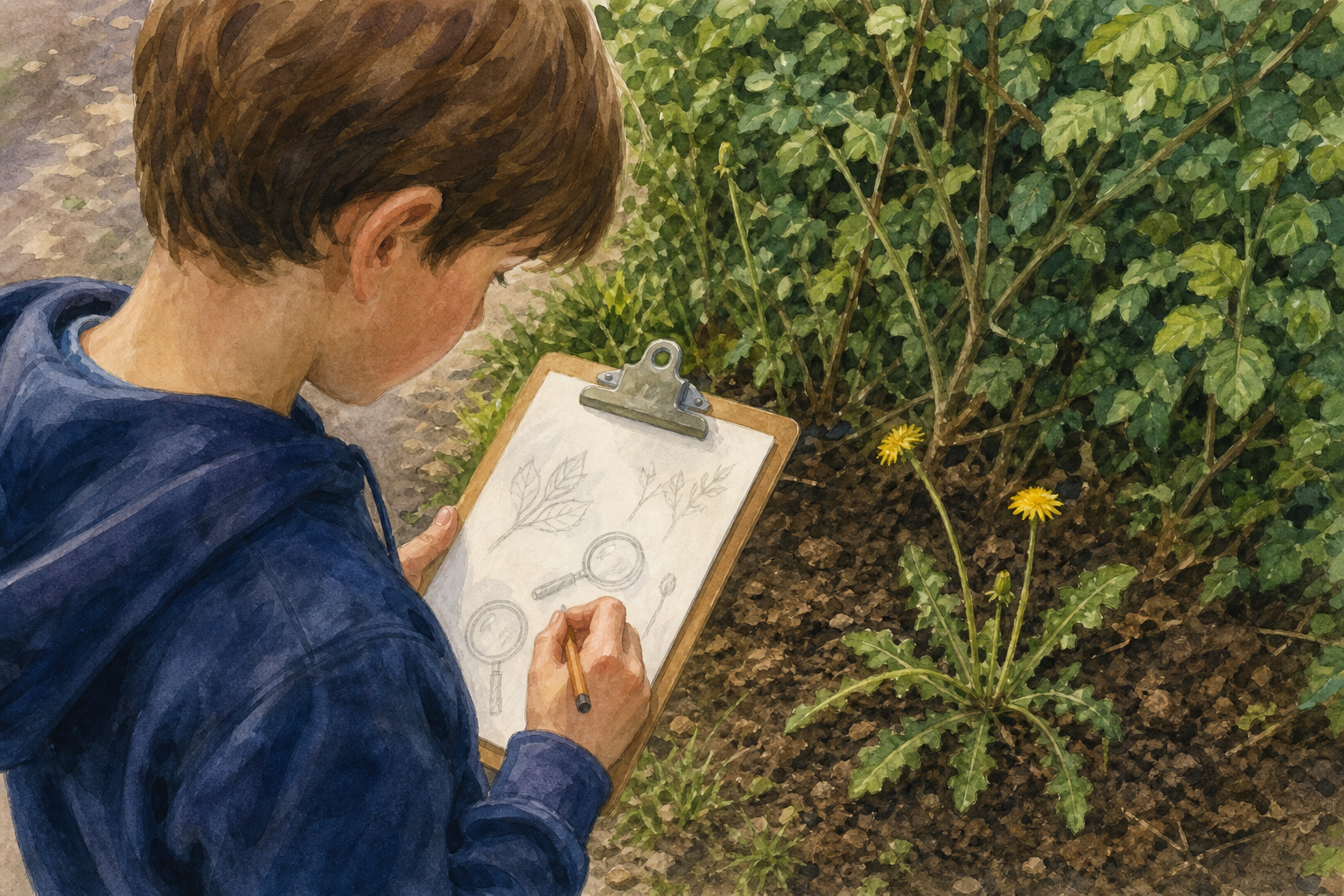
 We have surveyed our grounds and researched why biodiversity matters. Today we turn that science into one real action nearby. This is the bit real conservation teams love: turning what we found into a change living things can actually use.
Glance at your audit notes and research with your partner for thirty seconds. What problem did we find, and what could we do about it? Be ready to share one idea.
Which gap in our grounds is the strongest reason to act today?
A biodiversity action is a real change we make so living things nearby can feed, shelter or breed. Knowing about living things only helps if we turn that knowledge into something practical on our site.
Example: if our audit found almost no dry shelter for minibeasts, a small bug hotel would be a biodiversity action that fills that gap.
Next we will choose which action matches our evidence, and later we will name what we will check next time to see if it helped.
This is the scientist's decision, not a popularity vote. The grounds told us what is missing.
An evidence-based choice means we pick one action because of what our audit and research showed, not only because an idea looks fun.
As a class we will choose one action for our grounds today: a pollinator patch, a bug hotel, or a marked wild corner.
Use the audit and the research. Which option best matches the gap we found, and why?
Now we turn the choice into a plan the class can actually build.
Together on the board we freeze one shared plan: what we will build or set up, which audit finding it answers, group jobs, and two success signs (checks we will use later as evidence of impact in a before-and-after comparison). At least one check must be something next session can honestly see.
On your Investigation Journal page, jot only the chosen action, the outdoor spot, and those two checks in your own words. You will write what you actually did after the build.
How will this action help the living things our survey found were missing or scarce?
Time to take the action outdoors for the bees, beetles, spiders or other living things our audit showed were missing or scarce.
There is one class build at the agreed spot. Groups do not make separate versions. You only carry the jobs we already agreed (for example fetch, plant, pack, mark, boundary watch, tidy).
Stay inside the boundaries, handle tools carefully, and leave the site tidy and clearly marked.
Unlock the full learning experience
You're previewing this lesson. Get full access to this lesson and hundreds more — each one ready to teach, with interactive activities, printable resources and pupil progress tracking built in.
This lesson is copyright of DigitalSkills.org 2017 - 2025. Unauthorised use, copying or distribution is not allowed.