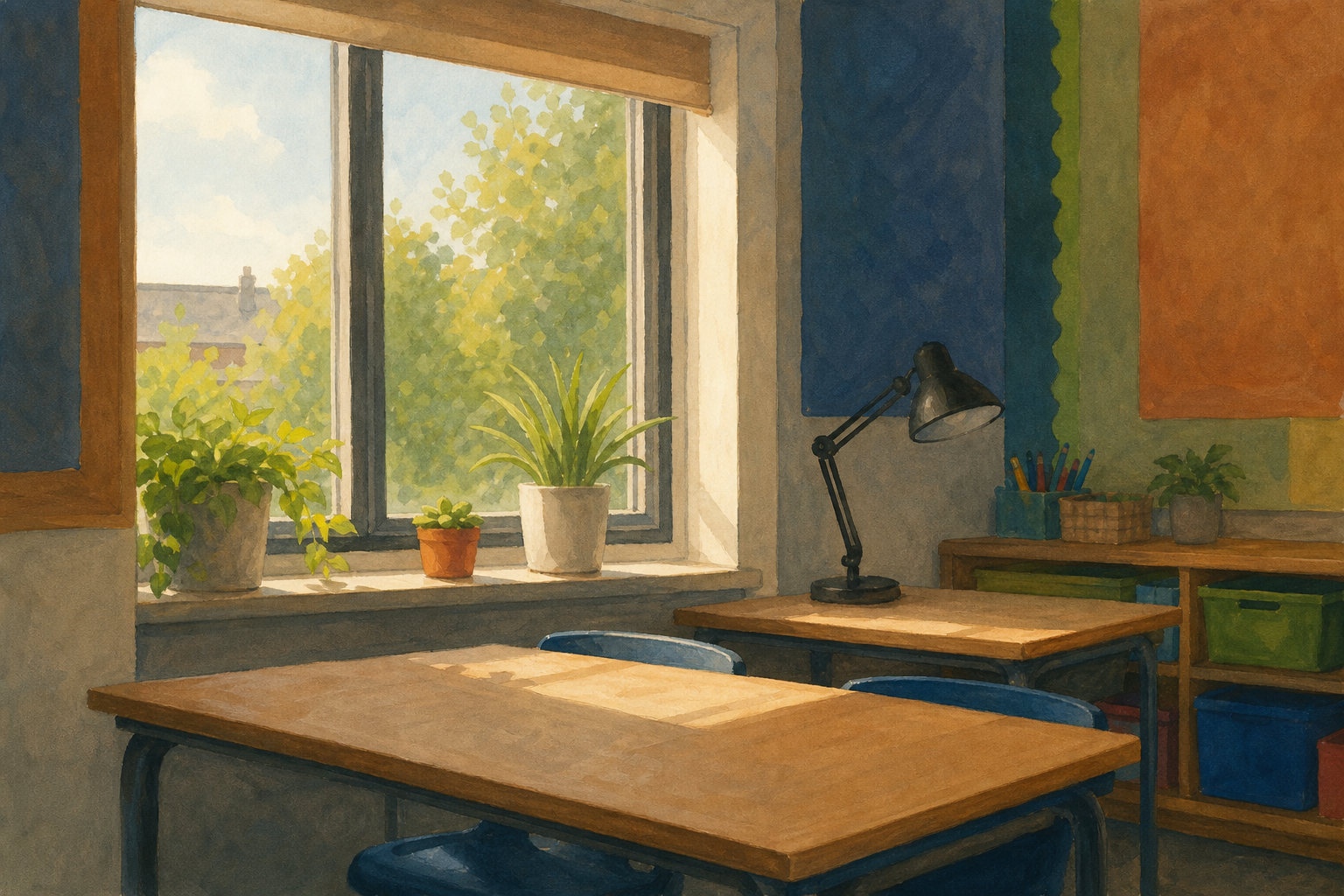
 Close your eyes for three seconds. Open them. What changed?
We use light every day without thinking. Where is the light coming from in this room right now? If the sun went dark and every lamp, screen and torch went off, could you still see your pencil case on the desk?
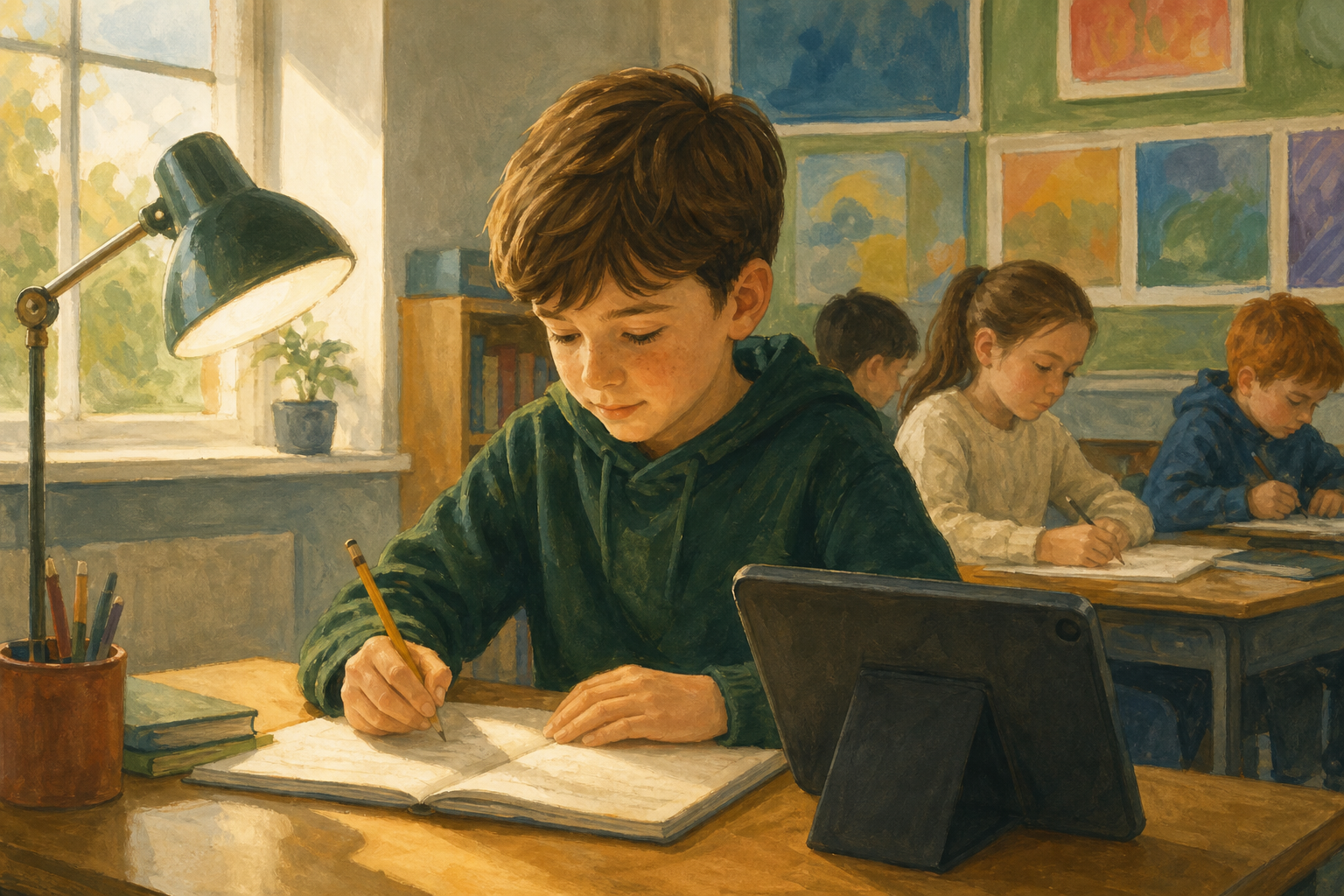 Right now light is helping you see this board. Some of that light comes from nature. Some is light people switch on or light themselves.
Natural light comes from nature, such as the sun or the stars.
Artificial light is light people make or switch on, such as a lamp, a torch or a candle.
People have always needed light when the sun goes down. Long ago in Ireland that might have been a rushlight (a small homemade light); today it might be the ceiling lights in our room.
We need light to see. Later we will test how materials let torchlight through.
We are going on a short light hunt around our classroom. Spot things that are giving out light right now, or that can give out light when switched on.
Sorting rule: natural = light from nature; artificial = light people make or switch on.
Sort each source. Be ready to say why. Before you finish, jot one natural and one artificial source on your Investigation Journal page.
Before we test, three quick words. Match each one to the sample your teacher holds up.
Transparent: clear bright patch (clear plastic).
Translucent: soft glow (tissue paper).
Opaque: dark patch (cardboard).
Now look at each test material. Will the screen show a clear bright patch, a soft glow, or a dark patch? Say your prediction out loud and give one reason. Predictions are the start of the science, not a test to get right.
We will test each material between a torch and a white screen. Use the word cards on the table: match what you see on the screen to clear bright patch (transparent), soft glow (translucent), or dark patch (opaque).
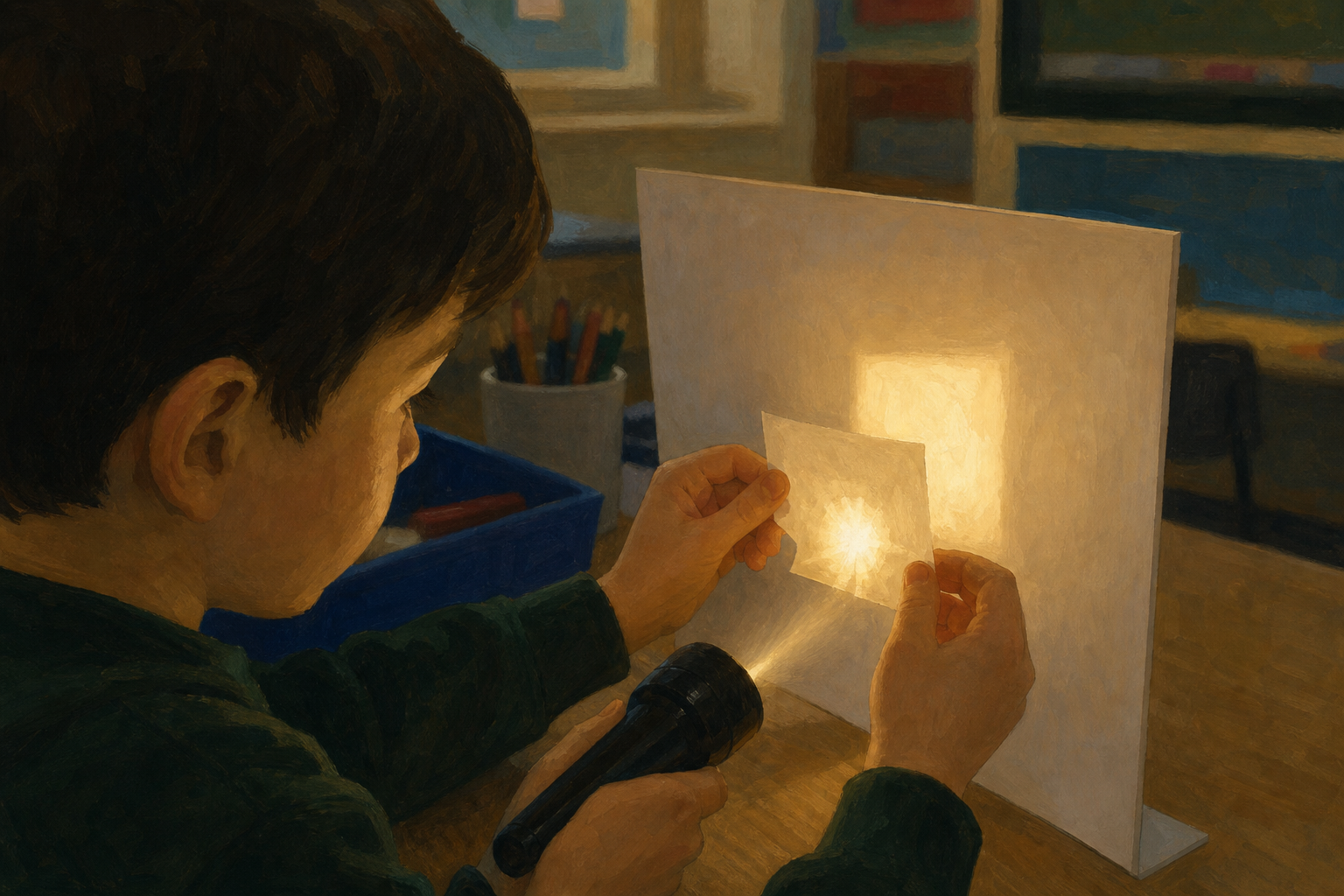 When your group has the torch, hold each material flat between the torch and the screen and decide together. When another group is testing, watch the screen with the class and help decide which word fits. Make a quick tick or word choice as you go; you will finish the full record next.
Line your six materials up from most light through to least. Then find one more material in the room (a lunchbox lid, a jumper sleeve, a page of your copy) and test it. Where does it go in your line?
Unlock the full learning experience
You're previewing this lesson. Get full access to this lesson and hundreds more — each one ready to teach, with interactive activities, printable resources and pupil progress tracking built in.
This lesson is copyright of DigitalSkills.org 2017 - 2025. Unauthorised use, copying or distribution is not allowed.