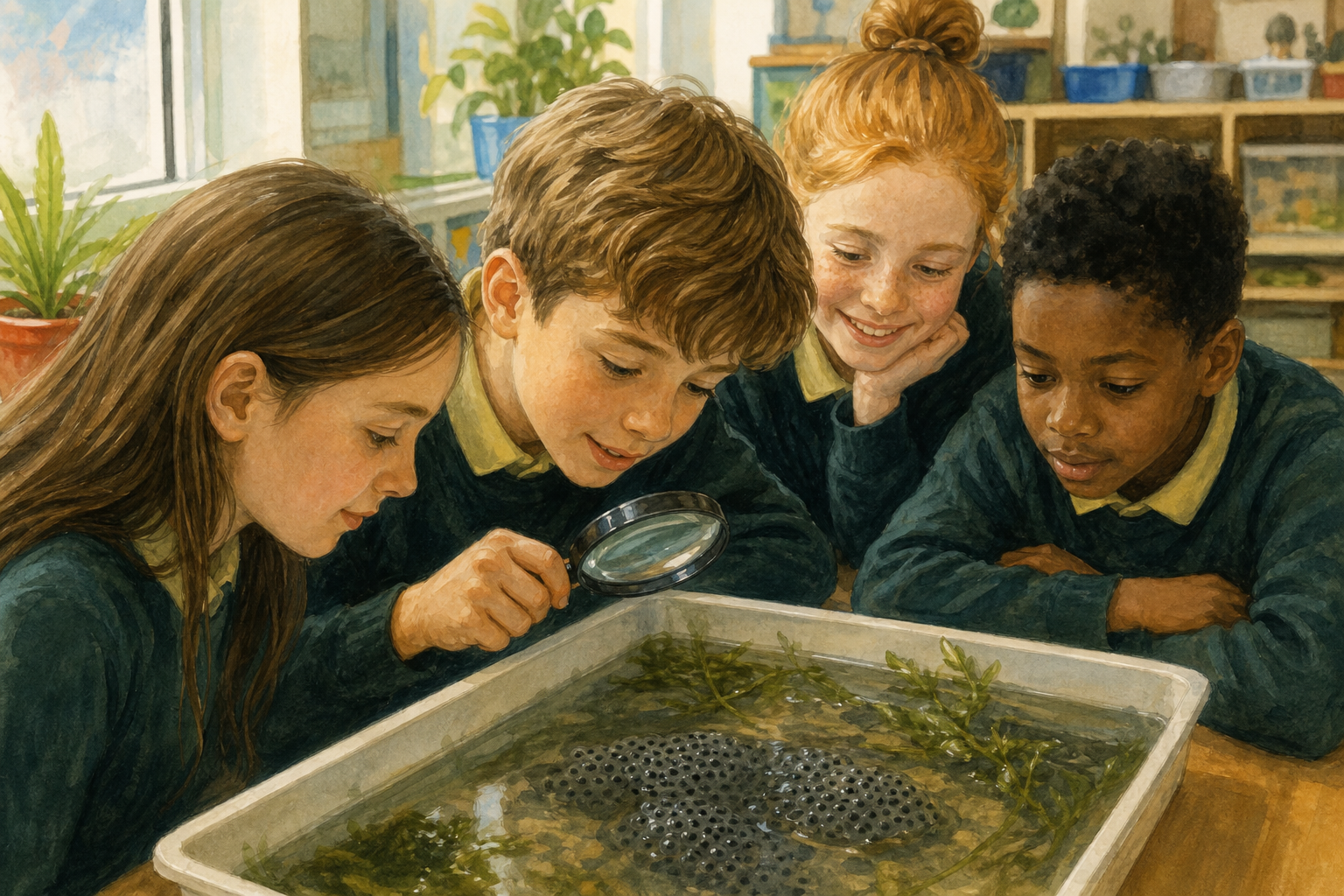
 A robin lays her eggs in spring, not in the middle of a frosty January. Why do you think that is?
Hands up your guess: what would a tiny newborn bird need that January just cannot give it?
Today's words: life cycle — the stages a living thing grows through, from its start to making the next generation. Cycle — a loop, where the last stage leads back to the beginning. What a stage needs — the warmth, food, daylight or shelter that stage must have.
 Why do we draw a life cycle as a ring and not a straight line?
Let's build the frog's life cycle together. Watch as the cards join up: frog spawn, then tadpole, then froglet, then adult frog.
Look at the arrow that runs from the adult frog back to the spawn. Why does it loop back to the start instead of stopping?
The frog life cycle
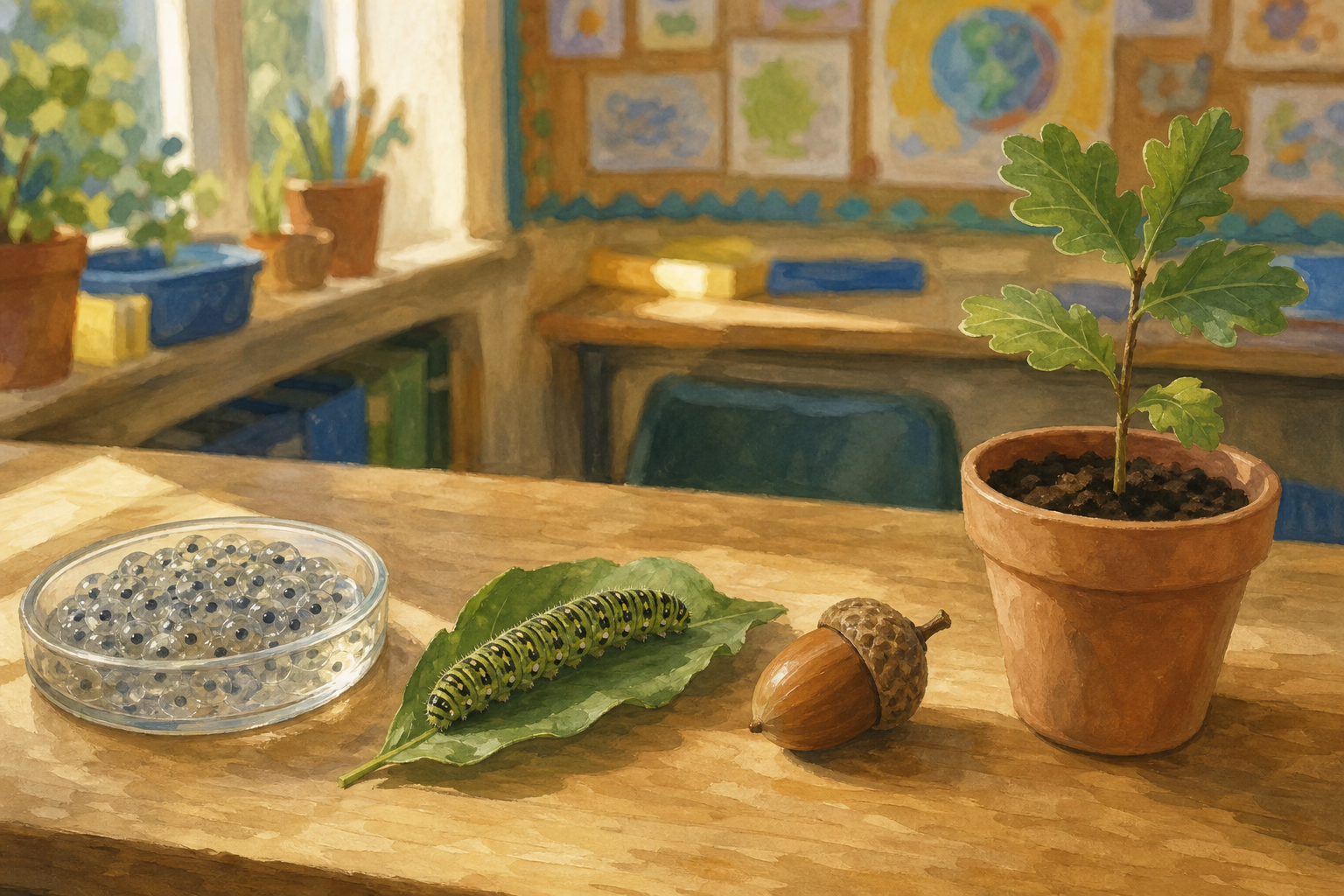
In your group you have stage cards for the frog, the butterfly and the oak, and a strip showing the four Irish seasons. This is talking and card-moving only, the writing comes next.
For each stage, ask one question: what does this stage need, and which season gives it? Then place it on the season strip and be ready to say why. If a stage genuinely spans two seasons, slide the card so it bridges both columns and be ready to explain why.
Now that your cards are placed, write down what your group decided. This is the first time you write it, so capture your group's outcome for each stage: what it is, what it needs, the season you chose, and why then.
Keep your reasons short: "the caterpillar needs soft new leaves, and those grow in spring."
Record the stages your own group placed — if you run out of time, finish the rest for homework.
Unlock the full learning experience
You're previewing this lesson. Get full access to this lesson and hundreds more — each one ready to teach, with interactive activities, printable resources and pupil progress tracking built in.
This lesson is copyright of DigitalSkills.org 2017 - 2025. Unauthorised use, copying or distribution is not allowed.