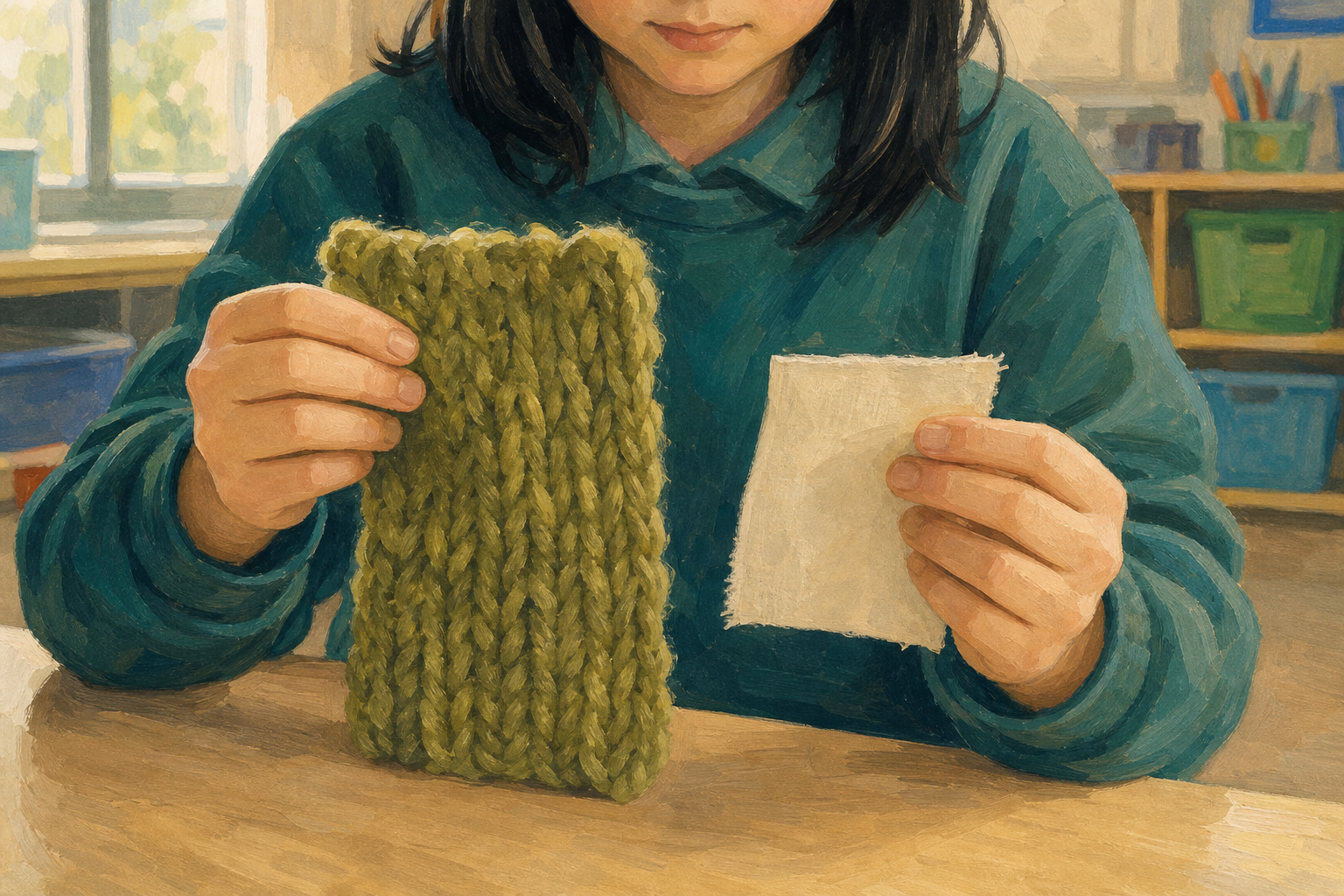
 On a cold Irish morning, which keeps you warmer: a thin T-shirt or a thick wool jumper? Why do you think that is?
Today we will test which materials keep warmth in longest, using a fair test you already know how to plan.
Some materials are heat insulators: they slow heat leaving, like a thick wool jumper on a cold yard day. That is what we will test today: which wraps keep warmth in better.
 The opposite idea is a heat conductor: heat passes through it easily, like a thin metal spoon in a warm drink that soon feels warm in your hand. We will not test metal spoons today, but we can use the word when a wrap behaves more like a leavers than a keeper.
We already know a fair test: change one thing, measure one thing, keep the rest the same.
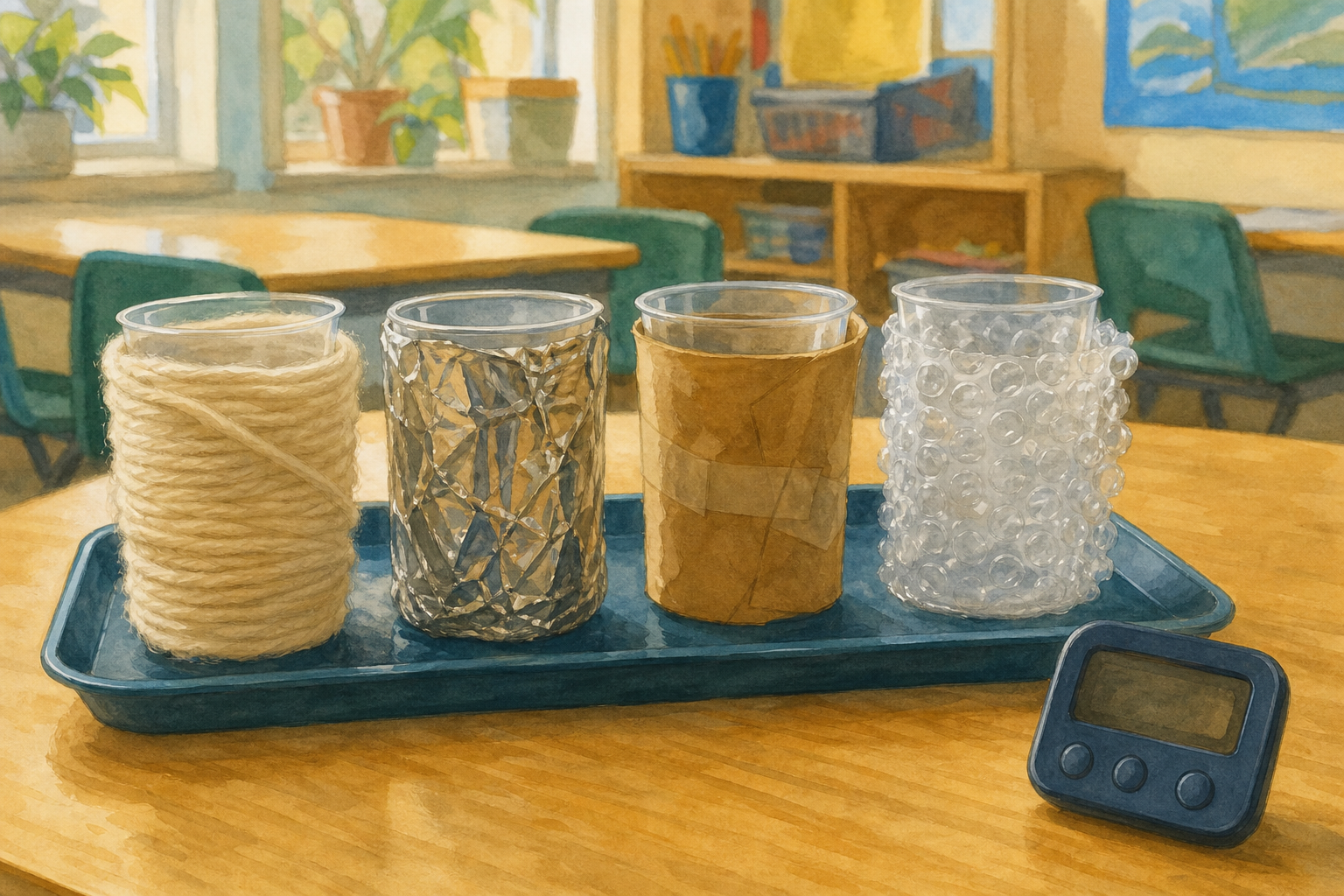
Today we will wrap cups in wool, foil, paper or bubble wrap, or leave one bare. Which wrapping do you think will keep warm water warm longest?
Our question: Which wrapping keeps warm water warm longest?
The wraps we will test are: wool, foil, paper, bubble wrap, and bare (no wrap).
Whisper to your partner which wrapping you think will win, and one reason why. Think about thickness, fluffiness or trapped air. Be ready to share.
We already know how to plan a fair test. Five cards appear: wrapping material, how warm the water stays, the cup, amount of water, and wait time.
Call out where each belongs: Change, Measure, or Keep the same. Then complete the planning part of your Investigation Journal page.
Which wrapping keeps warm water warm longest?
Your group will wrap identical cups in different materials: wool, foil, paper, bubble wrap, and one bare cup with no wrap. Hold each wrap in place with an elastic band or a small piece of tape so it cannot slip.
The teacher pours the same amount of warm water into each cup. Start the wait together when the last cup is filled.
When time is up, unwrap each cup (or peel the wrap down). We need the warmth of the water and the cup wall, not the outside of the jacket. One agreed judge in your group checks every cup with the same hand, in the same order, and ranks each from 5 (still very warm) to 1 (about room temperature). Be ready to share your ranks.
Unlock the full learning experience
You're previewing this lesson. Get full access to this lesson and hundreds more — each one ready to teach, with interactive activities, printable resources and pupil progress tracking built in.
This lesson is copyright of DigitalSkills.org 2017 - 2025. Unauthorised use, copying or distribution is not allowed.