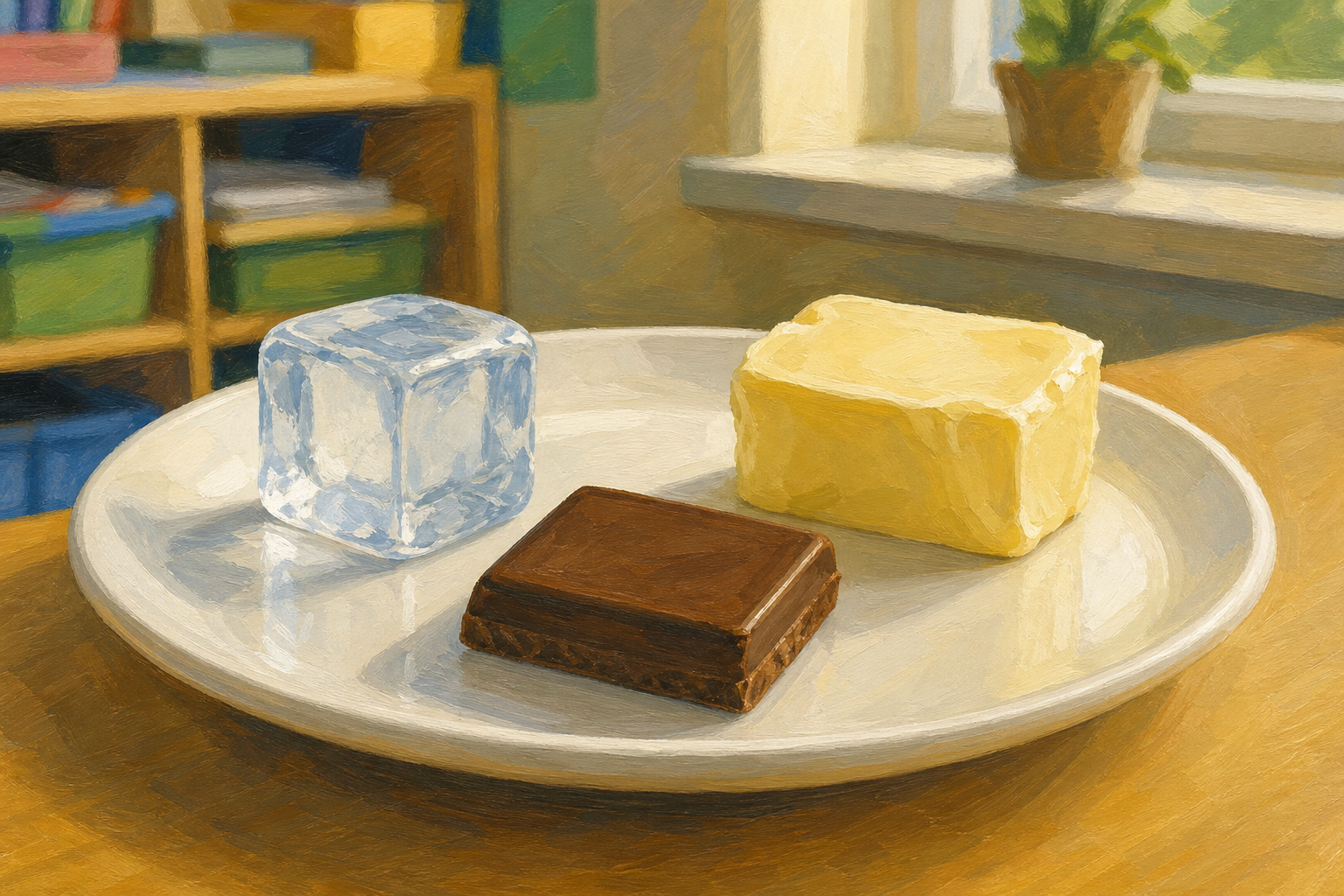
 Look at these three things: an ice cube, a square of chocolate and a small lump of butter. If gentle warmth reaches them, which do you think will change first, and will any change only a little?
Show of hands as we go: ice first… chocolate… butter… We will watch carefully and find out.
 You have already met ice that turns to water on a warm day. Today we name what is happening.
Two words for today: melt means a solid softens and turns liquid when it is warmed. Cool means something loses heat and gets colder.
Which of our three materials do you think will melt first on gentle warmth? After we watch, we will add one more word for changes that can go back.
Our question today: What happens to ice, chocolate and butter when we warm them gently, and what happens when we cool them again?
On your Investigation Journal page, write or draw what you think will happen to each one when it is warmed, and whether you think any of them can go back when cooled. Say why in a short phrase.
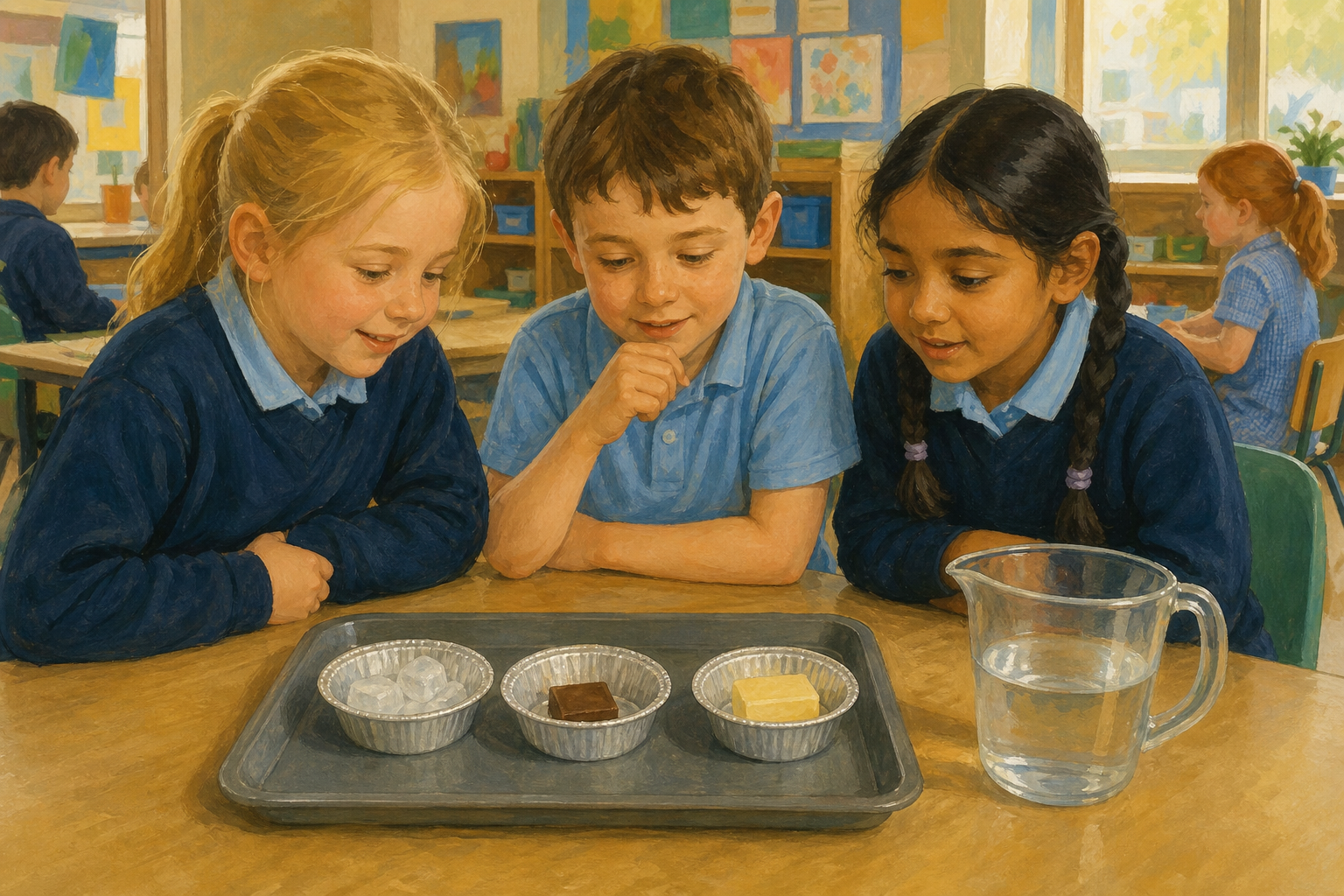
Watch the teacher's tray. Three foil dishes hold ice, chocolate and butter. Warm water sits under the tray. Keep your Investigation Journal open: check the prediction you already wrote, then jot or sketch as you watch (solid, soft edges, or puddle).
Look for soft edges, shiny pools and any dish that still holds its shape. We do not touch or taste anything on the tray.
The dishes are away from the warm water now so they can cool. Watch again, and add a quick cool note or sketch on your Investigation Journal page.
Look for: edges that firm up, a thicker or dull top on the chocolate pool, butter that looks less runny, and which dish still looks most like a puddle.
Unlock the full learning experience
You're previewing this lesson. Get full access to this lesson and hundreds more — each one ready to teach, with interactive activities, printable resources and pupil progress tracking built in.
This lesson is copyright of DigitalSkills.org 2017 - 2025. Unauthorised use, copying or distribution is not allowed.