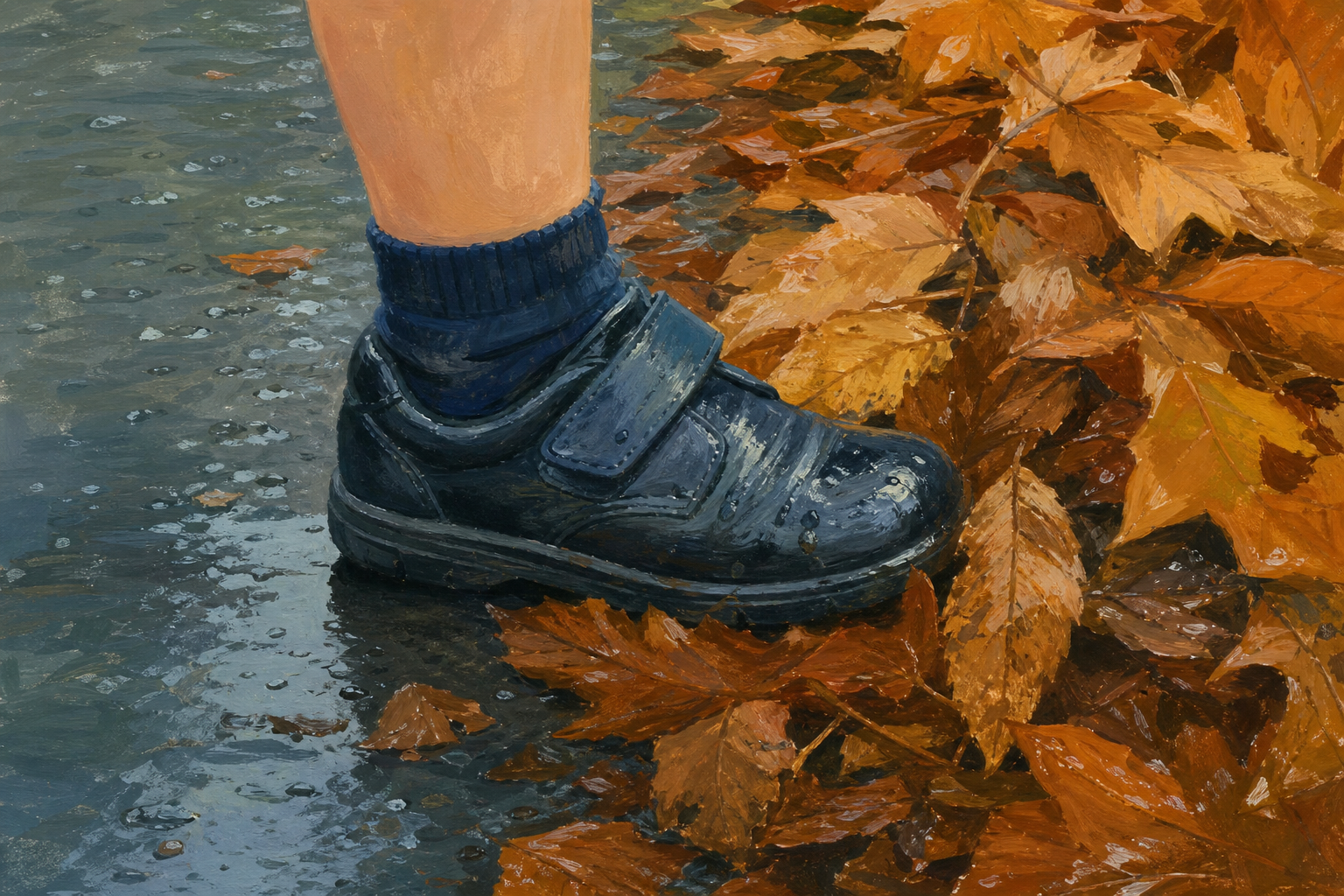
 Imagine you are running on the school yard after rain. Which is safer under your feet: dry tarmac or a wet patch of leaves?
Hands up: which surface do you think grips more, and why?
When two surfaces rub, a force called friction can slow things down. How strongly a surface holds on is its grip.
The same rubbing that makes a shoe hard to start also slows it once it slides. Today we compare grip by how hard it feels to get a loaded shoe started.
A loaded shoe is an old shoe with a bottle or bag of rice inside so it has a steady weight.
Look at these four surfaces: carpet, tile, sandpaper and a towel. Hands up: which one do you think will grip that loaded shoe most?
We want to find out: which surface grips a loaded shoe most? To compare fairly, we change only one thing.
On the board you will see three places for our cards: Change (what we swap each time), Measure (what we notice or feel — not always a ruler), and Keep the same (what we leave alone so the test stays fair).
Four cards appear: the surface, how hard it feels to pull, the loaded shoe, and how we pull. Call out which card goes in Change, which goes in Measure, and which two stay in Keep the same.
Which surface grips most?
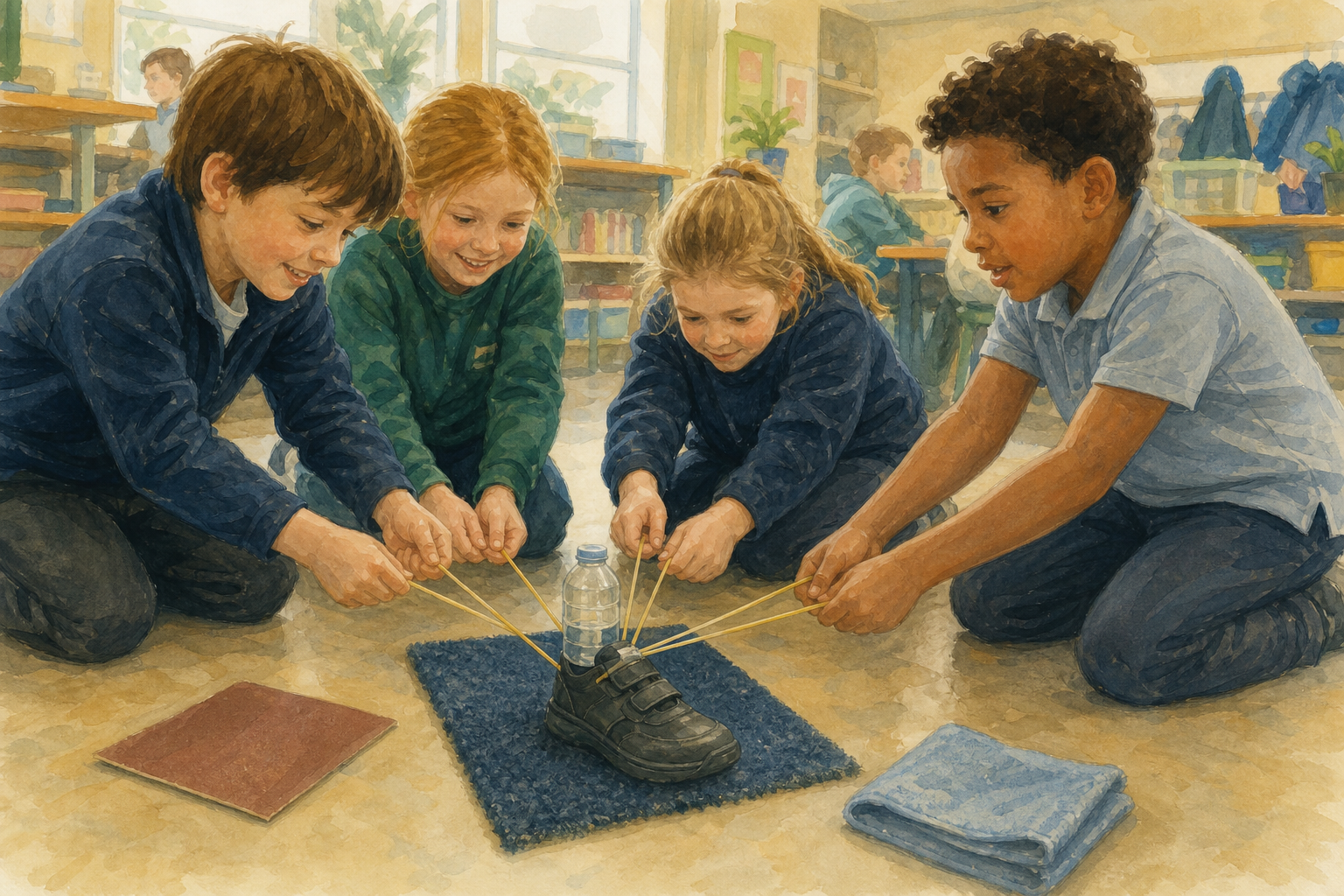 Before you pull, agree in your group: which surface do you think will grip most, and why? Write that short prediction on your Investigation Journal page.
In your group, drag the loaded shoe across each surface the same way. One person is the puller for every surface. Loop the elastic band around the shoe and pull steadily until it just starts to move.
Everyone else: watch the pull carefully. After each surface, the whole group agrees aloud — easy pull, medium pull, or hard pull? Write that feel next to the surface name on your journal page straight away so nobody has to remember it later.
Do not rank yet. Just capture easy, medium or hard for carpet, tile, sandpaper and the towel before you leave your floor spot.
Use the easy, medium and hard marks you wrote during the pulls — do not try to remember the feels from scratch.
On your Investigation Journal page, write or draw each surface and put them in order from most grip to least grip. When the ranks are down, you may add one short sentence about why you think that order happened.
Unlock the full learning experience
You're previewing this lesson. Get full access to this lesson and hundreds more — each one ready to teach, with interactive activities, printable resources and pupil progress tracking built in.
This lesson is copyright of DigitalSkills.org 2017 - 2025. Unauthorised use, copying or distribution is not allowed.