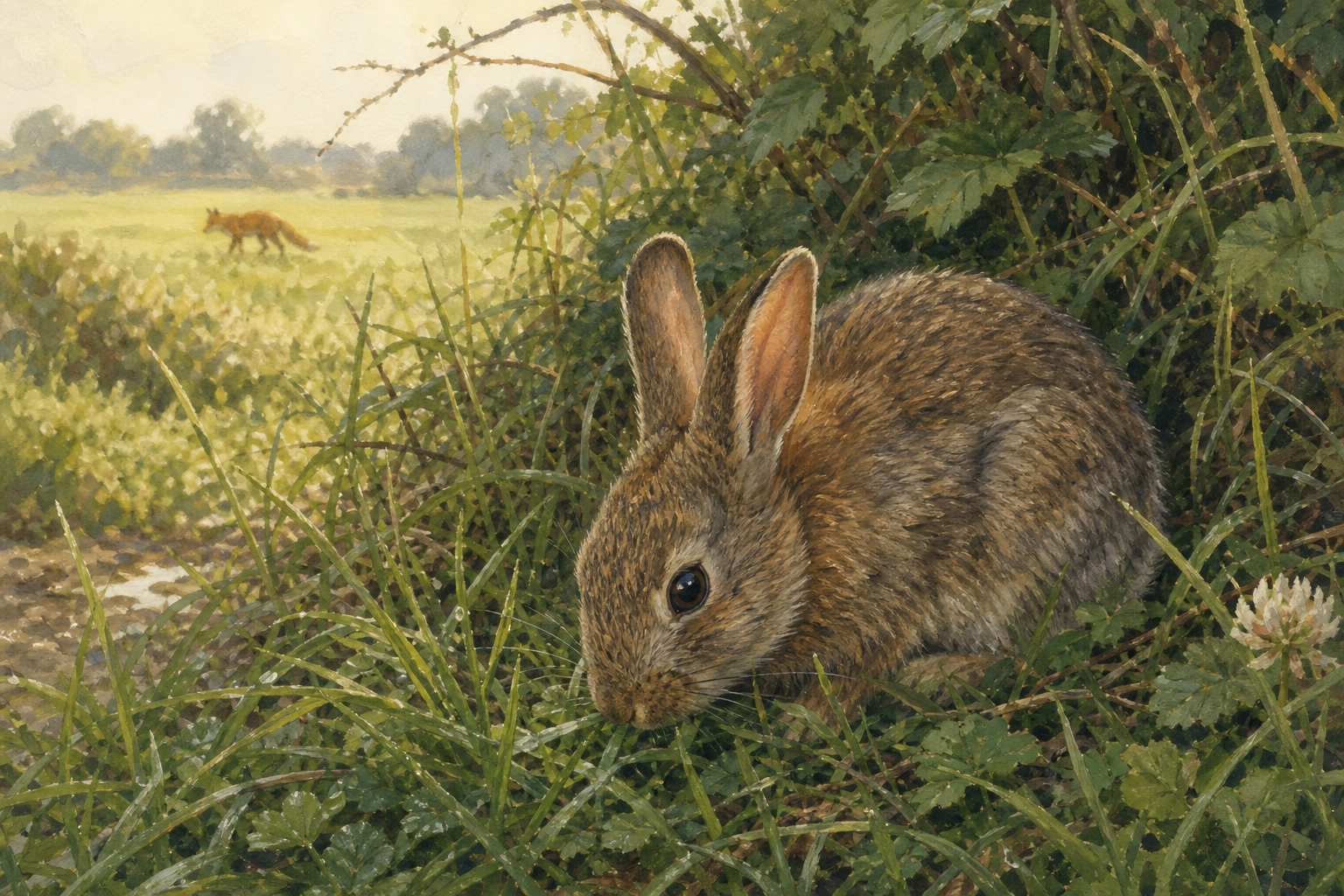
 A fox needs a rabbit. A rabbit needs grass. Grass needs the sun. What do you think happens if the grass disappears?
Talk with the person beside you for thirty seconds, then we will hear a few ideas.
 Every meal in the hedgerow starts with sunlight. Plants catch that energy first. Then a rabbit eats the plant, and a fox eats the rabbit: the energy has moved along a path we call a food chain.
We call the plant a producer and the animals consumers. The arrows show which way the energy travels.
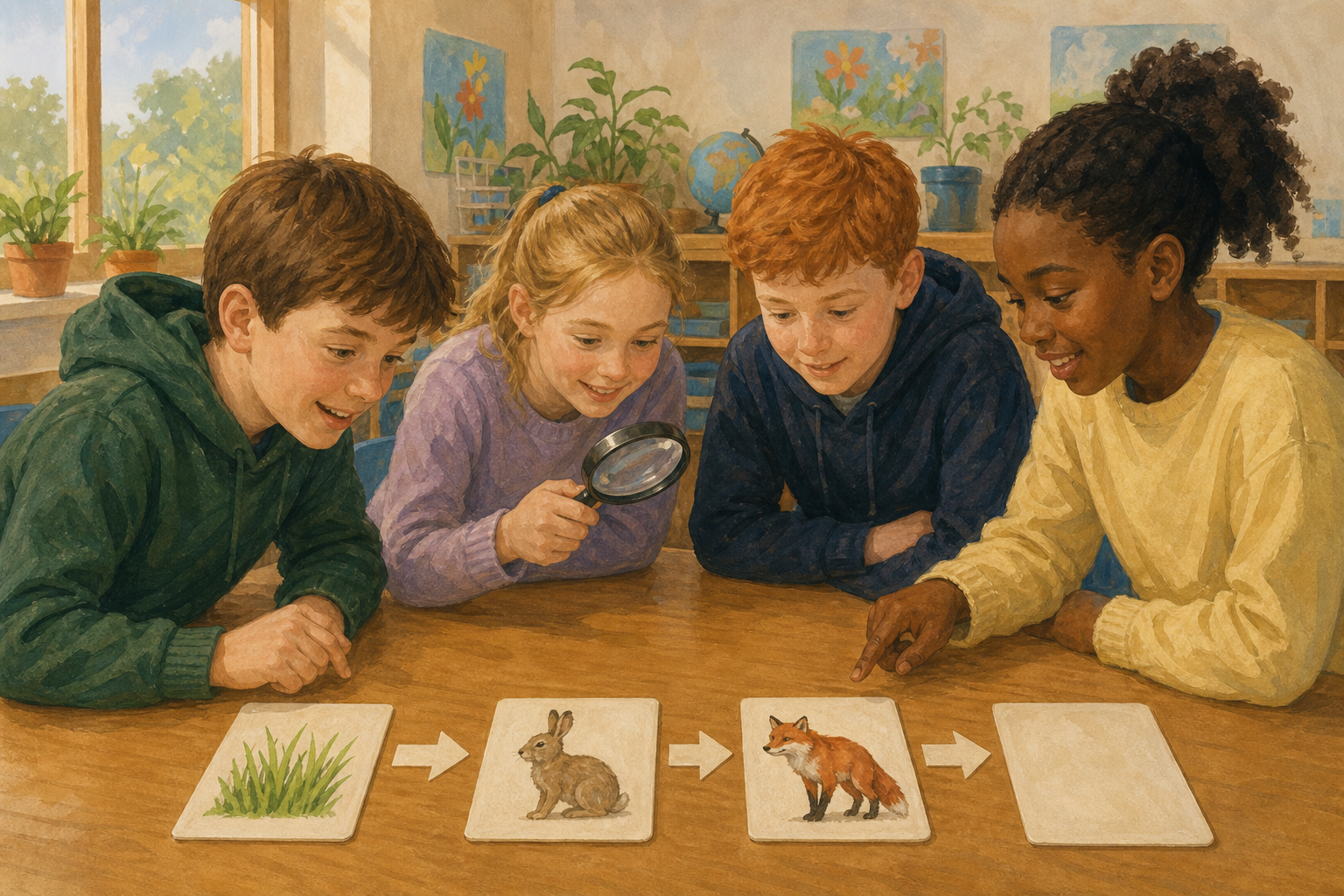
Now we build an Irish food chain together on the board. The cards ready to place are sun, grass, rabbit and fox, but not yet in order.
Call out which card should come first, then next. Which way should the arrows face? Why must a plant come near the start?
Remember: the sun is the energy source, not a living producer. The first living thing in the chain is the plant.
An Irish food chain
Now we build a different Irish chain together. The cards on the board are sun, oak leaves, caterpillar and robin, but not yet in order.
Call out which card should come first, then next, until the energy path is right. Remember: arrows show where the energy goes. The sun is the energy source; the first living producer is the plant.
Build another Irish food chain
A food web is several food chains joined because animals often eat more than one food. Look at this tiny shape: grass → slug → thrush and oak leaves → caterpillar → thrush. Two paths share one thrush card, with two arrows into it.
In your group, build a simple Irish food web with the picture cards and arrow cards. Each living thing appears only once. Every path starts with a plant. Join two short paths around at least one shared animal.
Be ready to point to a producer and a consumer.
Unlock the full learning experience
You're previewing this lesson. Get full access to this lesson and hundreds more — each one ready to teach, with interactive activities, printable resources and pupil progress tracking built in.
This lesson is copyright of DigitalSkills.org 2017 - 2025. Unauthorised use, copying or distribution is not allowed.