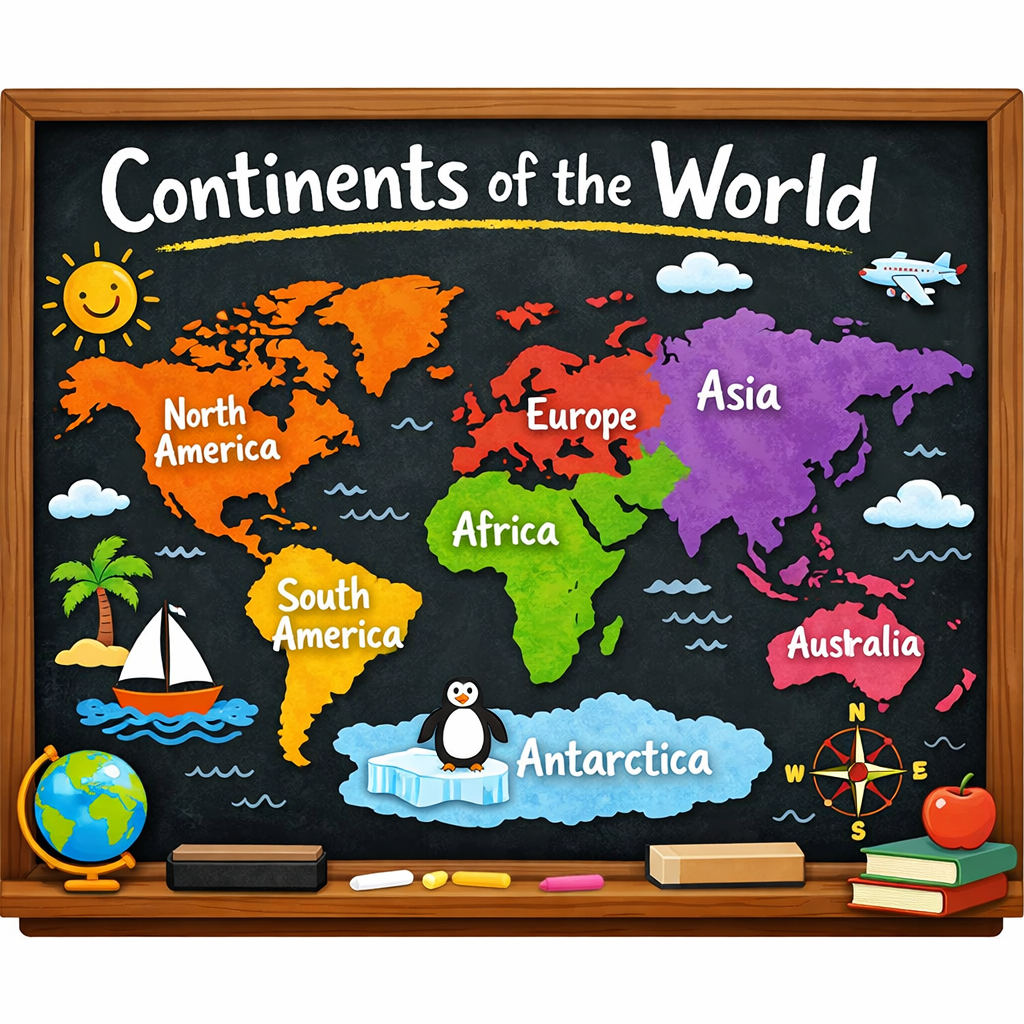
 Have you ever wondered where in the world your favourite animals live, or why some places are covered in snow while others have sandy deserts?
Today, you will explore the 7 continents of the world. Continents are the large areas of land on Earth.
- Learn what a continent is.
- Discover where Ireland is and what makes each continent special.
- Match countries to their continents using fun drag-and-drop activities.
By the end of this lesson:
You will know the names of all 7 continents and some facts about each one. You will also be able to say which continent some countries belong to.
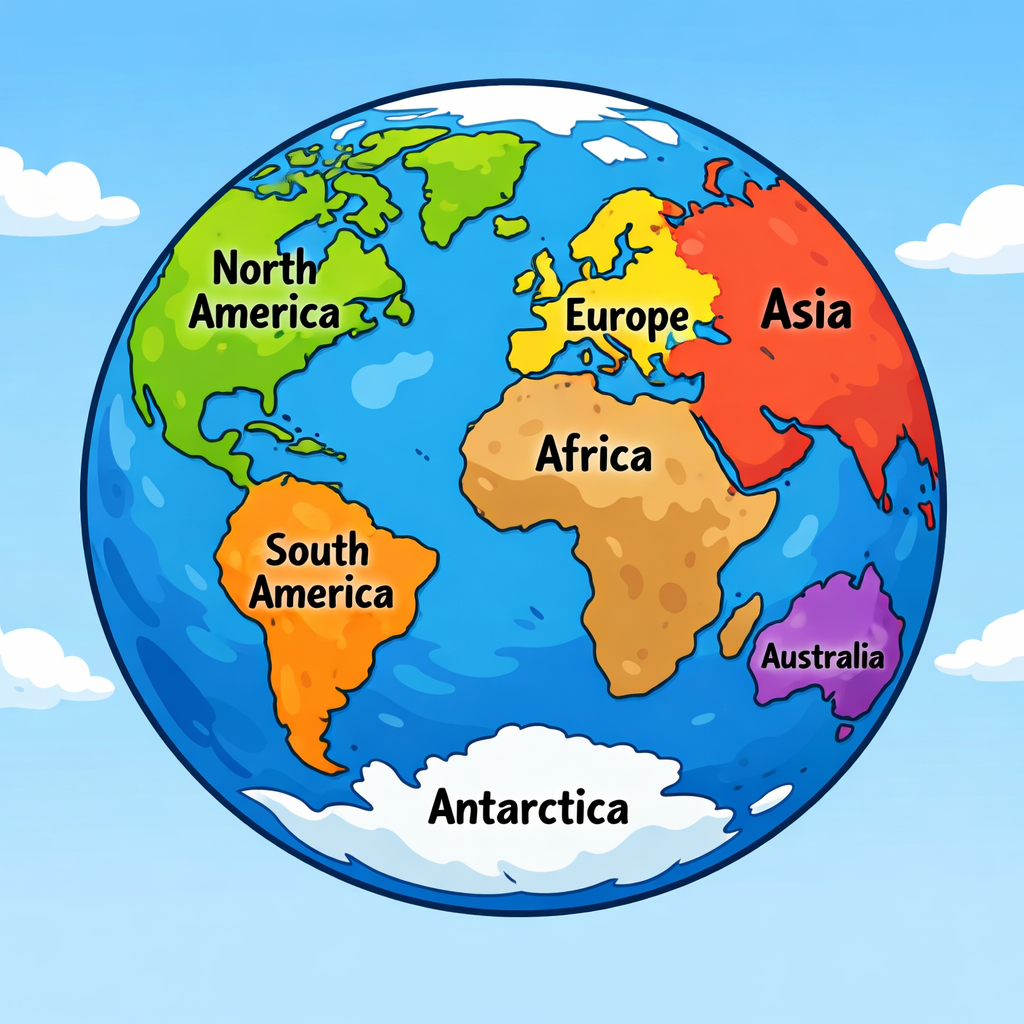 The Earth is made up of large areas of land called continents. There are 7 continents in the world.
- Africa
- Asia
- Europe
- North America
- South America
- Australia (Oceania)
- Antarctica
Each continent contains many countries, cultures, and environments.
✨ Did You Know?
Long ago, all the continents were joined together in one huge piece of land called Pangaea. Over millions of years, they slowly drifted apart to their current positions.
Drag the Country to the Correct Continent
Drag each country tile onto the correct continent on the simplified map.
Countries
Drag from here to the map.
World Map
Drop each country on its continent.
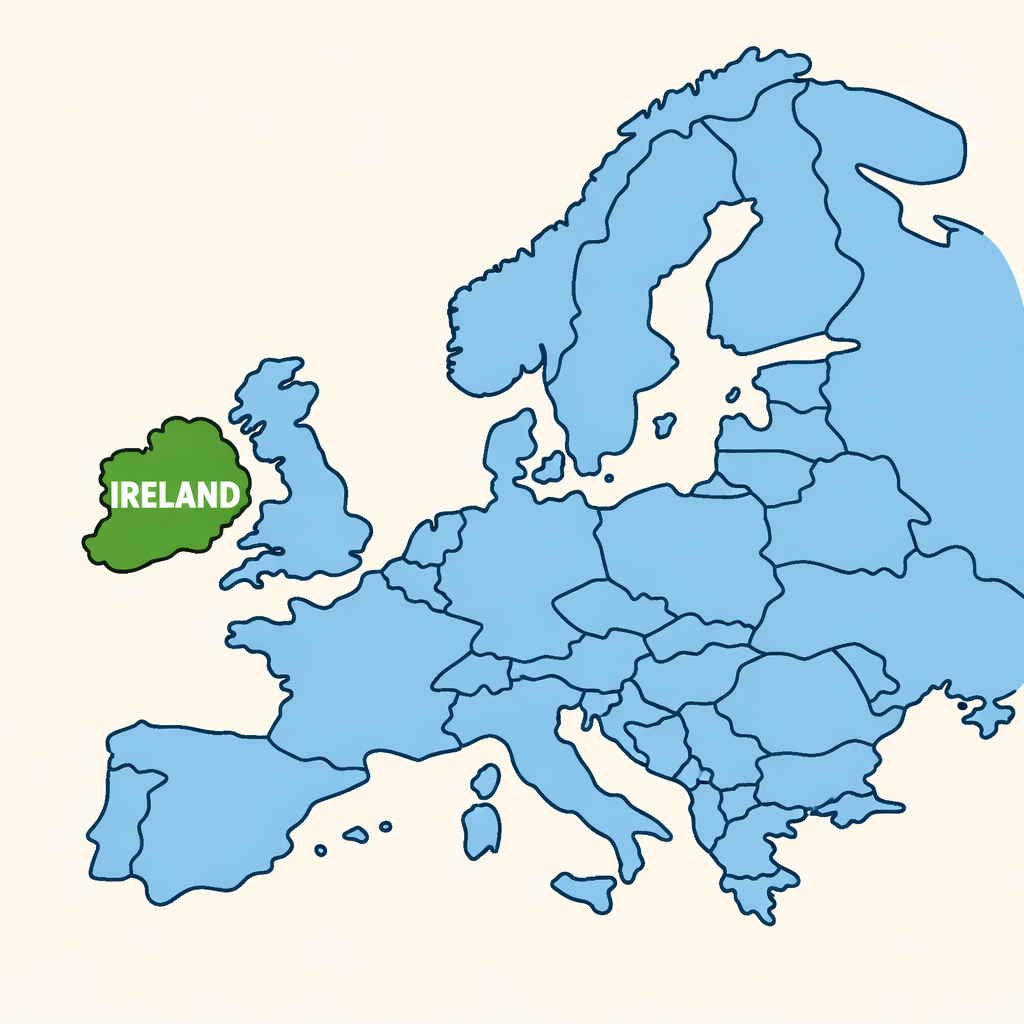
Ireland is found in Europe. Europe is one of the smaller continents, but it has a lot of variety. Neighbouring countries can have their own unique ways of life.
Europe is a continent in the world with many countries, each having different languages, traditions, foods, and histories.
Some countries in Europe include France, Spain, Germany, Italy, the United Kingdom, and Sweden.
Europe has mountains like the Alps, rivers like the River Thames, and coasts along the Atlantic Ocean and Mediterranean Sea.
These features help shape the countries and the people who live there.
✨ Did You Know?
Ireland gets more rain than most places in Europe, which keeps its land very green. That is why it is called the Emerald Isle.
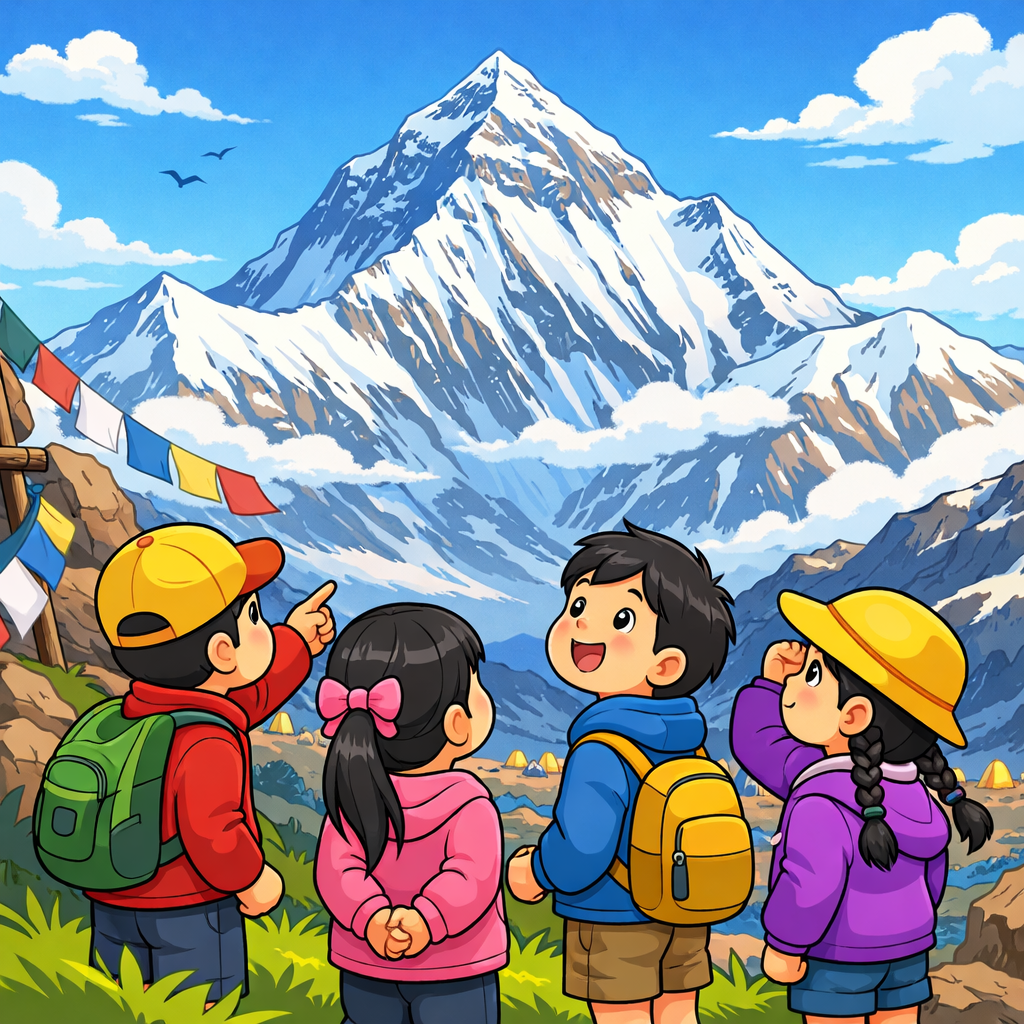 The largest continent in the world is Asia. It is also the most populated continent, meaning more people live there than anywhere else on Earth.
Asia includes many countries such as China, India, and Japan. These countries have different languages, cultures, and ways of life.
The continent also has a wide range of landscapes, including mountains, deserts, forests, and rivers.
✨ Did You Know?
Mount Everest, the highest mountain in the world, is in Asia. It stands at over 8,800 metres tall on the border between Nepal and China.

Unlock the Full Learning Experience
Get ready to embark on an incredible learning journey! Get access to this lesson and hundreds more on our learning platform.
This lesson is copyright of DigitalSkills.org 2017 - 2025. Unauthorised use, copying or distribution is not allowed.