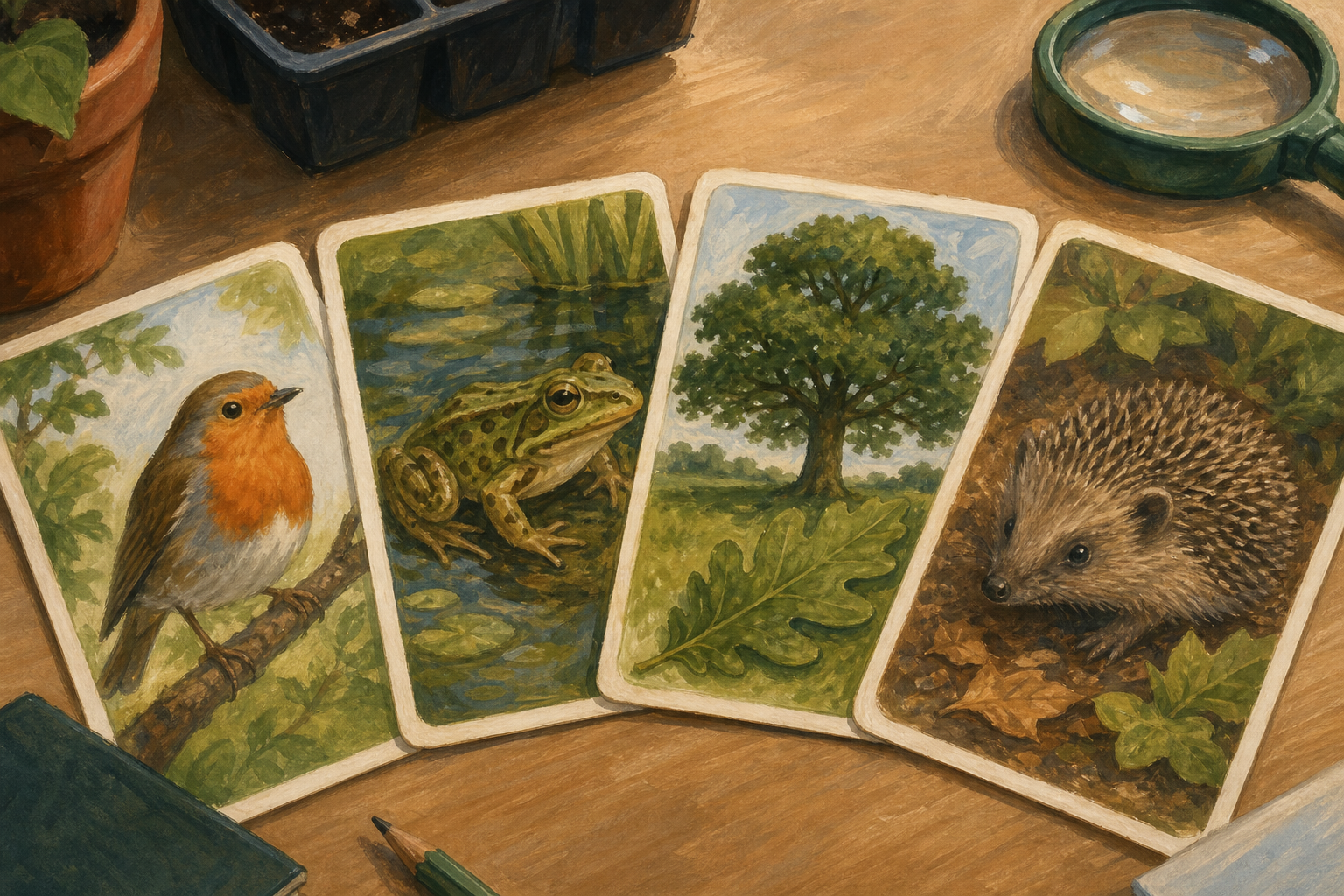
 Look at these Irish wildlife cards: a robin, a frog, an oak, a hedgehog. How would you sort them into groups so someone else could find each one again?
Here is a split with four living things: robin, frog, oak, hedgehog.
First question: Is it a plant? Oak goes Yes. Robin, frog and hedgehog go No.
Next question for the animals: Does it have feathers? Robin goes Yes. Frog and hedgehog go No.
- Is it a plant?
- Yes → oak
- No → Does it have feathers?
- Yes → robin
- No → frog and hedgehog, still together
That line of yes-or-no questions is a branching key. Each question is about a feature you can see. Using features to sort living things into groups is called classify.
Which feature question would you ask next to split frog from hedgehog?
In your group, sort the Irish wildlife photo cards with yes-or-no questions about features. Write each question on a sticky note and stick the cards under Yes or No until every living thing has its own named place. Then record your finished branching key on your Investigation Journal page: list each question in order and write which living thing sits at each end point.
On the board you will see the same eight Irish wildlife cards: robin, frog, oak, hedgehog, fox, salmon, ladybird and snail. The end points are the features, not the names. We will answer one clear yes-or-no feature question at a time and send each living thing to its own end point. Watch where each card goes and say if you agree.
Sort the Irish wildlife
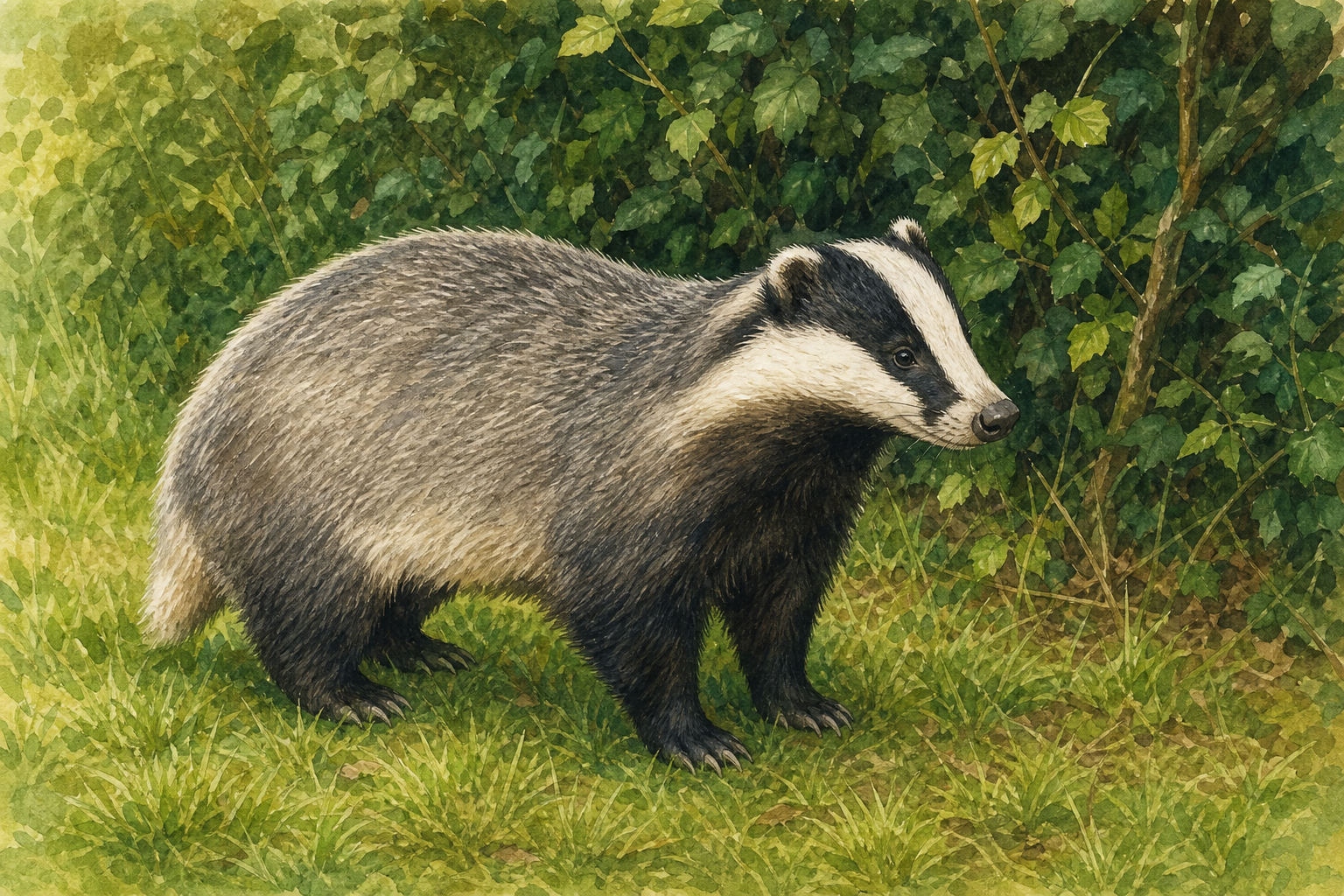 A mystery Irish wildlife photo is on the board. It is not one of the eight cards you sorted. We will follow a shared class branching key of yes-or-no feature questions. Answer from what you can see, not from guessing a name. On your Investigation Journal page, record each feature decision and the name you reach at the end.
Unlock the full learning experience
You're previewing this lesson. Get full access to this lesson and hundreds more — each one ready to teach, with interactive activities, printable resources and pupil progress tracking built in.
This lesson is copyright of DigitalSkills.org 2017 - 2025. Unauthorised use, copying or distribution is not allowed.