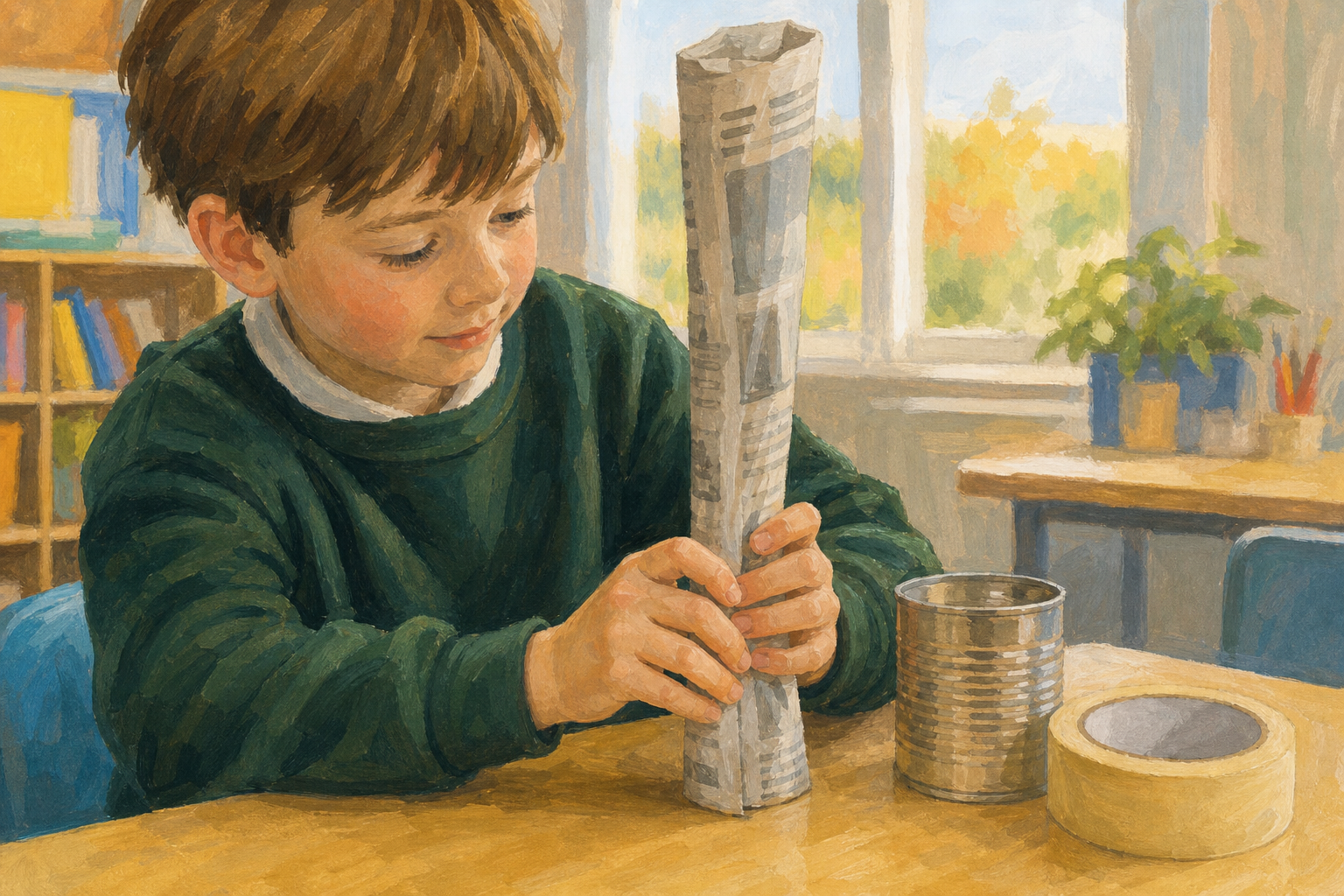
 Can you build the tallest tower in the room from only the materials on your table, so it stands on its own and holds a small weight on top?
What do you already know about shapes that stay stiff and do not flop?
Two words for today. Free-standing means the tower stands on its own with no hands holding it. Stable means it is hard to tip over. A wide base often helps.
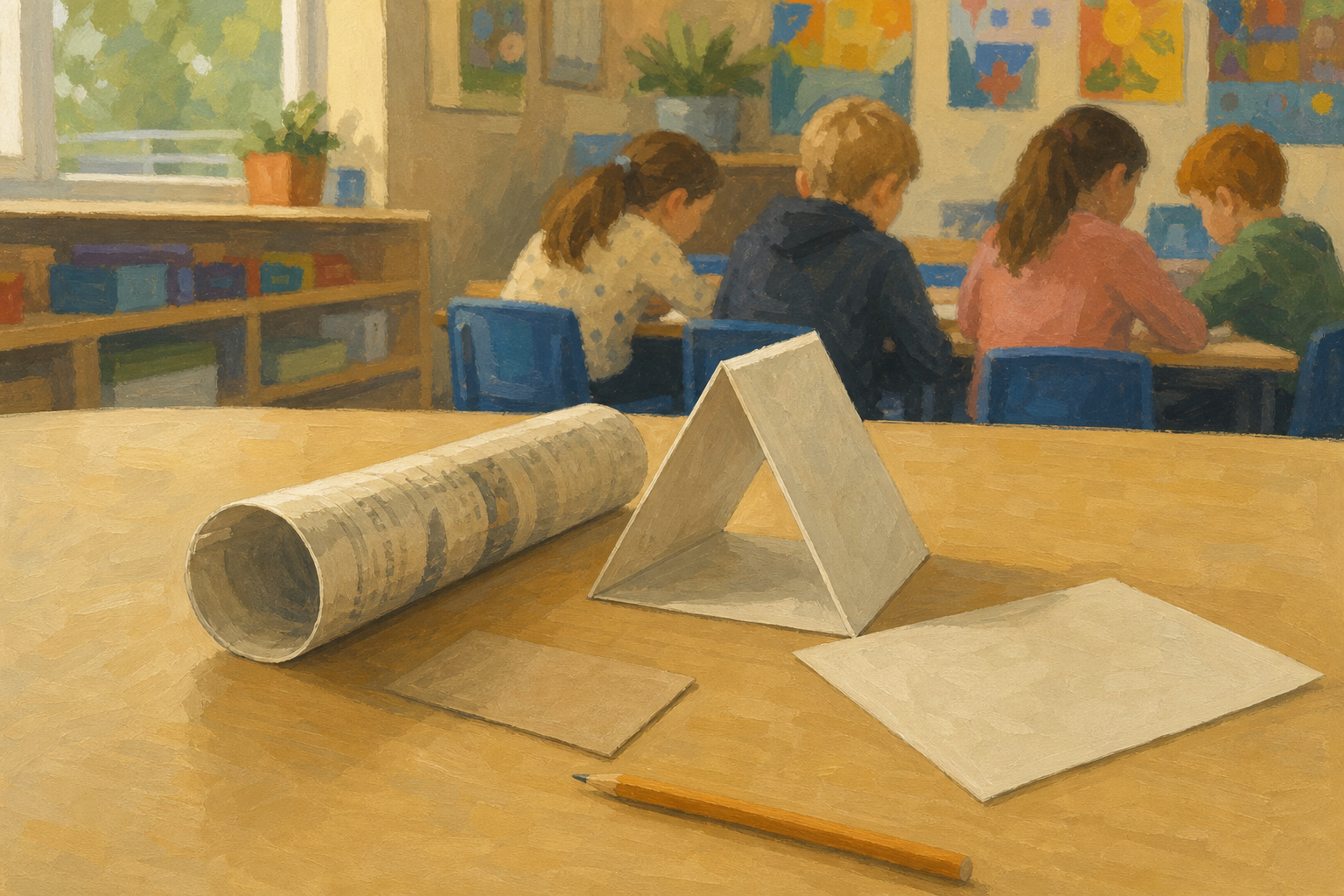 Watch: when hands come off, does it stay up? What shapes and ideas might help a newspaper tower stay tall and steady?
In your group of three or four, agree one tower idea. On your Investigation Journal page, sketch the tower you will build. Label the base, the strong shapes you will use, and where the weight will sit.
Success means: free-standing, as tall as you can make it, and able to hold the test weight on top.
Build the tower from your plan using only the materials on your table. Test stability gently as you go. If it wobbles, fix the weak part and keep building.
Remember: it must stand on its own, and there must be a place on top for the weight.
Your first tower is a prototype: a first model you test so you can improve it.
We test every tower the same fair way:
- Measure height (cm)
- Hands off: free-standing?
- Place the weight gently on top
- Watch for five seconds
The official measurer measures height and places the weight. The building group stands well back. Everyone else watches and writes three things on the Investigation Journal page: height in cm, free-standing yes or no, and held the weight yes or no.
While you wait, look at each base and predict: will it stay up and hold the weight?
Unlock the full learning experience
You're previewing this lesson. Get full access to this lesson and hundreds more — each one ready to teach, with interactive activities, printable resources and pupil progress tracking built in.
This lesson is copyright of DigitalSkills.org 2017 - 2025. Unauthorised use, copying or distribution is not allowed.