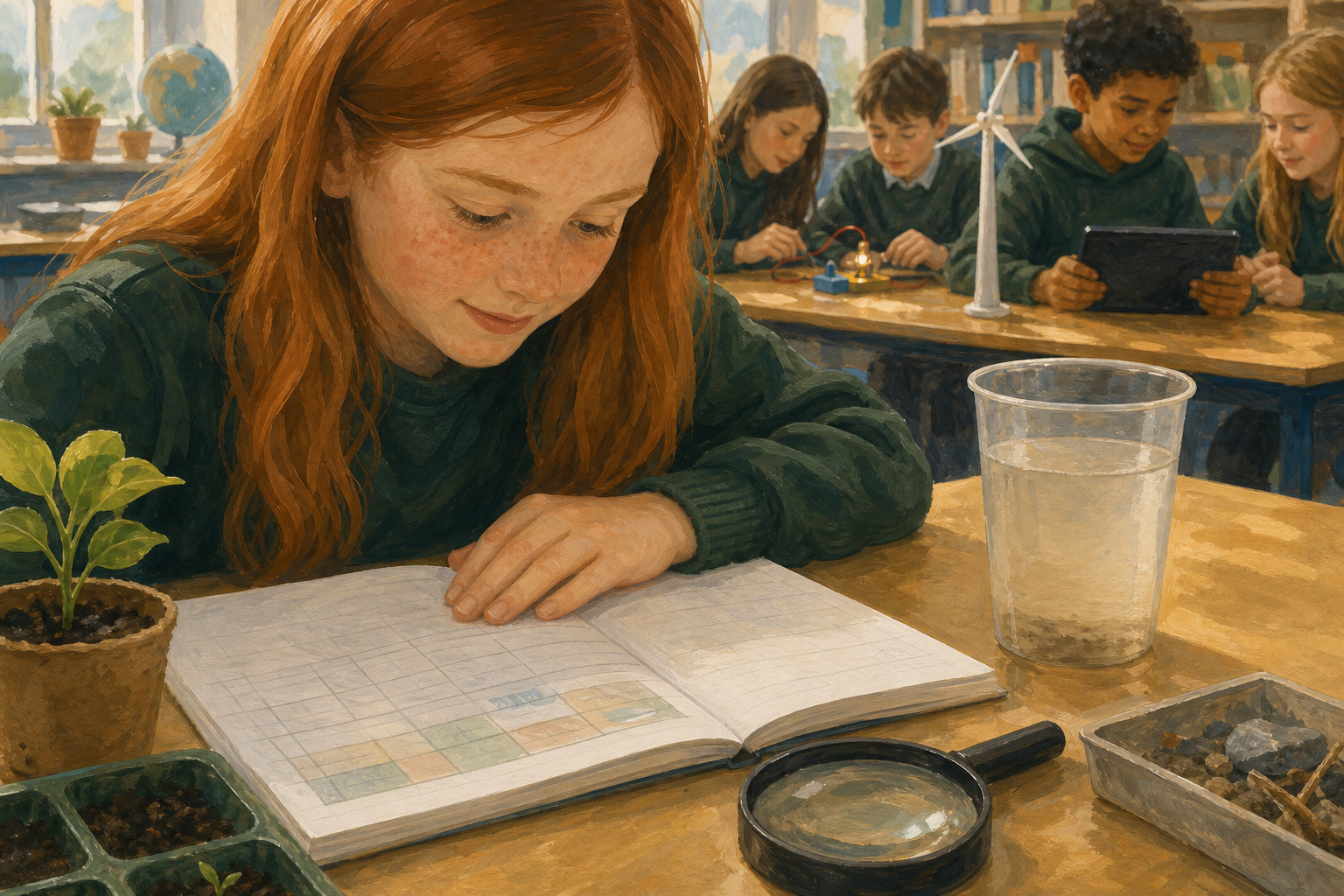
 Open the results you recorded earlier in this project. Without saying which method you used, what stands out: which trial looked cleaner, and which still looked sandy?
Today we turn those readings into a class table and chart, read what the evidence shows, then each group improves its own method once and re-tests.
We will build one class table of the first trials. Each group will call out its method and its sand-left score.
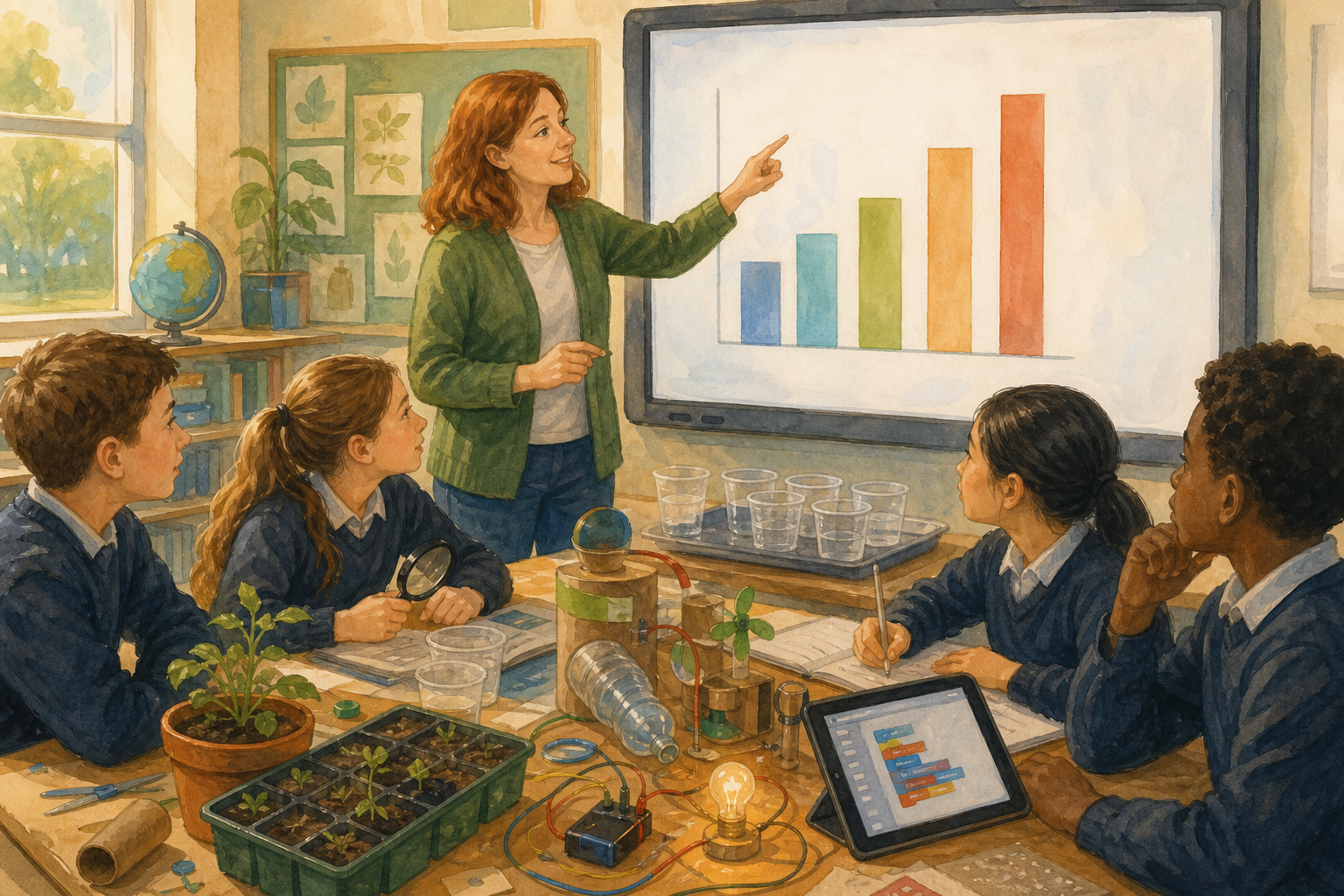
On screen the columns are Method and Sand left score (1–5). This is a judgment score we agree together so every group can share one comparable number. Score 1: you can read print through the cup. Score 3: cloudy like weak tea. Score 5: you cannot see a spoon behind the cup. Lower bars mean cleaner water.
If your group recorded millimetres last time, ask before you call out — we will map that reading onto the same 1–5 anchors together so every group still contributes one number.
How well did each method separate the sand?
 A single cup on your desk can fool you. Scientists trust the pattern across many results, and they separate what they saw from what they think it means.
Keep looking at the class chart on the board. Which method left the least sand? Which bars cluster together?
Look across the whole chart — that pattern is the evidence. When we change one thing and try again, that re-test lets us compare fairly. What must we keep the same if we improve a method and want a fair comparison?
Each group chooses one improvement to its own method from earlier in this project. Keep everything else the same: the amount of mixture, the time, the container, and how you score sand left.
Say your improvement out loud and predict: will the sand-left score go down, stay the same, or go up? Why?
Run your improved separation once, carefully. Score sand left the same way as before. Take the reading after the run, not from memory of the first trial.
One careful improved run is enough. Only if you finish early and the teacher says there is time may you repeat the improved run and agree one score to keep.
Wipe spills as you go. Do not taste the water.
Unlock the full learning experience
You're previewing this lesson. Get full access to this lesson and hundreds more — each one ready to teach, with interactive activities, printable resources and pupil progress tracking built in.
This lesson is copyright of DigitalSkills.org 2017 - 2025. Unauthorised use, copying or distribution is not allowed.